

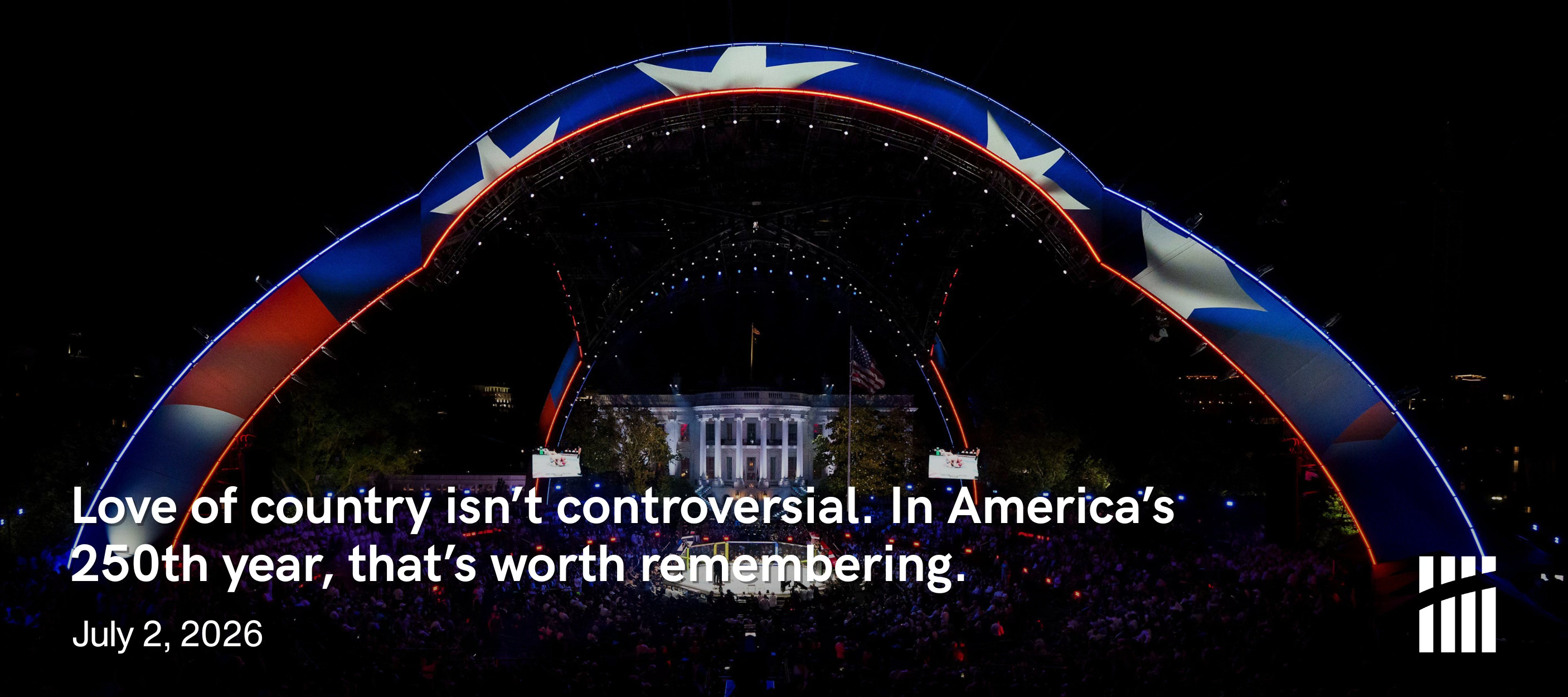
Love of country isn’t supposed to be controversial. But on the eve of America’s 250th birthday, if you opened your news app on any given weekday, you’d be forgiven for thinking the United States was stuck in a slow‑motion death spiral. The headlines don’t just list problems; they push a bigger story — that America is in decline, that patriotism is something to cringe at, and that any real pride about the country’s standing in the world is something serious‑minded adults have outgrown.
But there’s a clear, growing gap between the country being described in the media and the country people are actually experiencing every day. That gap doesn’t just distort how the rest of the world sees America — it changes how Americans see themselves.
How We’re Told to See America
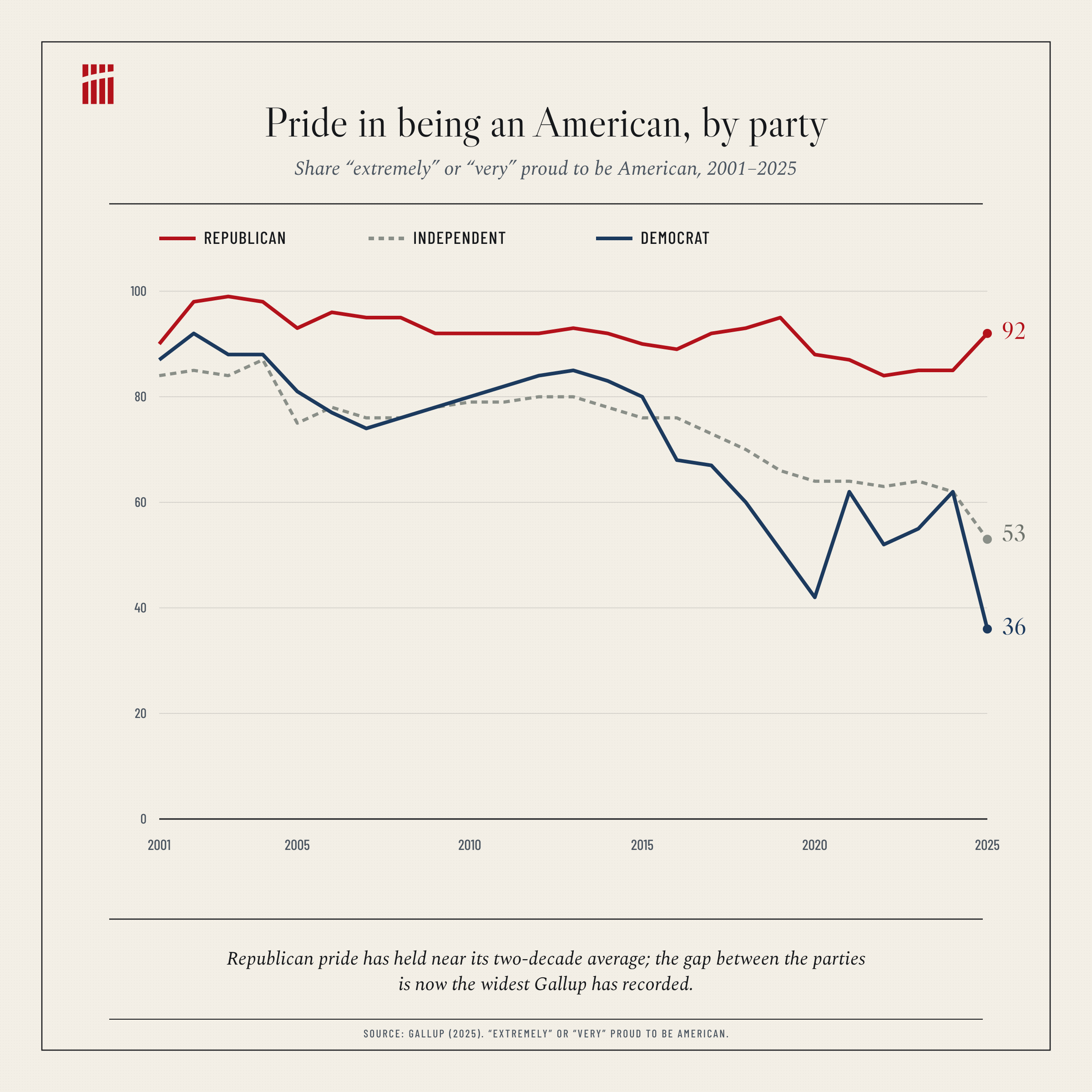
Some of the most prominent recent headlines from places like The New Yorker, The New York Times, and The Washington Post treat patriotism as if it’s radioactive. They point to polls showing fewer Americans say they’re “extremely proud to be American,” ask in essays like “How Problematic Is Patriotism?” whether loving this country is even possible without embarrassment, and cast things like the White House UFC card as a “perfect metaphor for the moment” in all the worst ways instead of calling out the real impulse underneath: marking 250 years by doing something unmistakably American — big, loud, public, and open to regular people.
Open your phone and you see the same mood in economic headlines like “Wages Are Falling. Wealth Is Surging. No Wonder Americans Are Unhappy”. Taken together, the message is clear: you’re a little suspect if you don’t have an immediate negative knee-jerk reaction to anything remotely pro-America.
The bigger problem is that success or national achievement increasingly struggle to qualify as news. The more resilient America’s underlying fundamentals have become, the less interested much of the media has seemed in covering them. The result is a lopsided picture of the country itself.
The View from the World Cup
Ironically, the same left‑leaning media ecosystem that most loudly champions globalism while wringing its hands about America just had its narrative bubble popped by actual global visitors: people from around the world descending on the U.S. for the World Cup and, to their surprise, finding a lot to love.
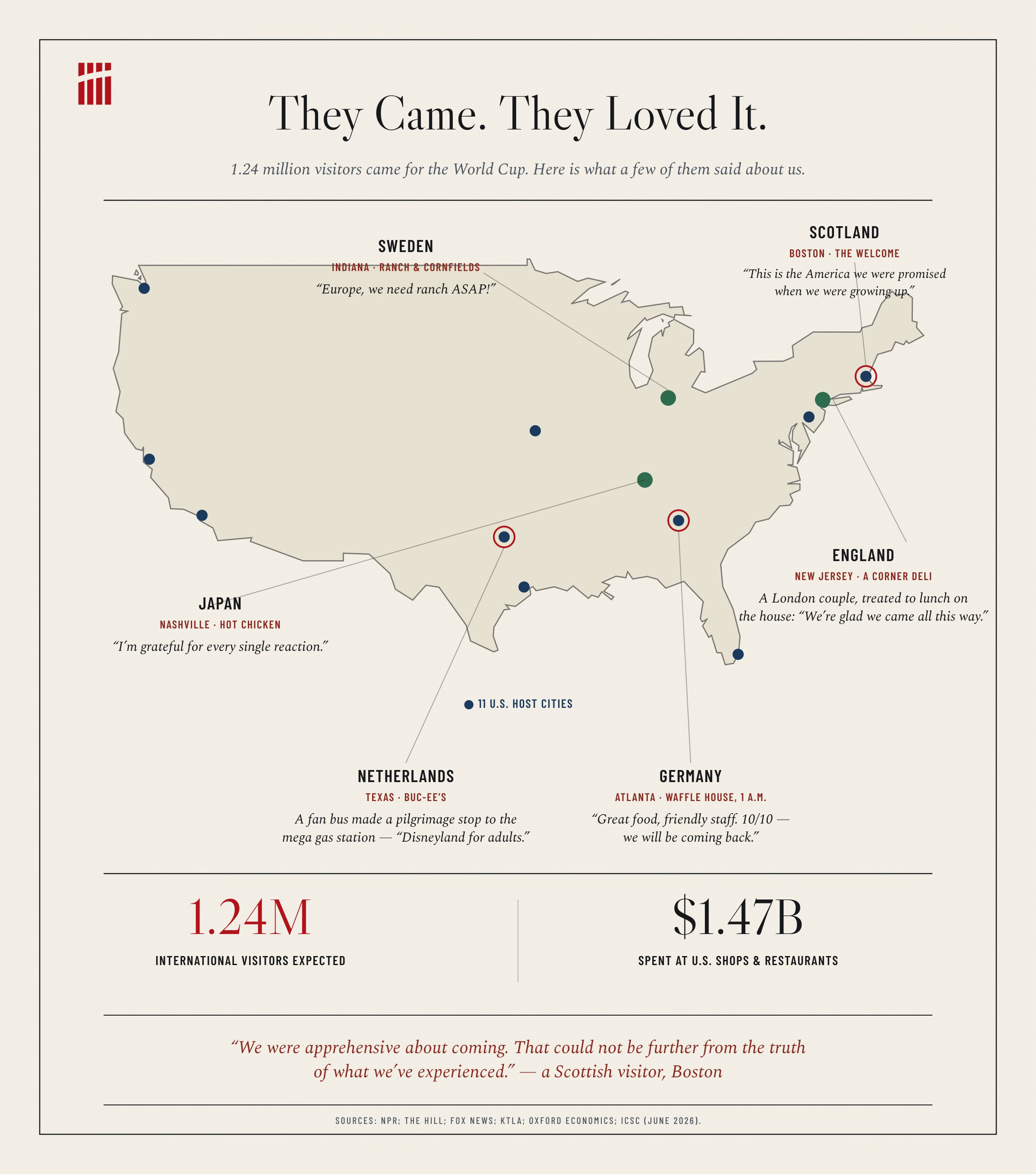
Even as many Democratic officials keep their distance from what is objectively a huge success for the U.S. and the wider North American hosts, people of all political stripes are leaning in and reveling in the chance to root for the country.
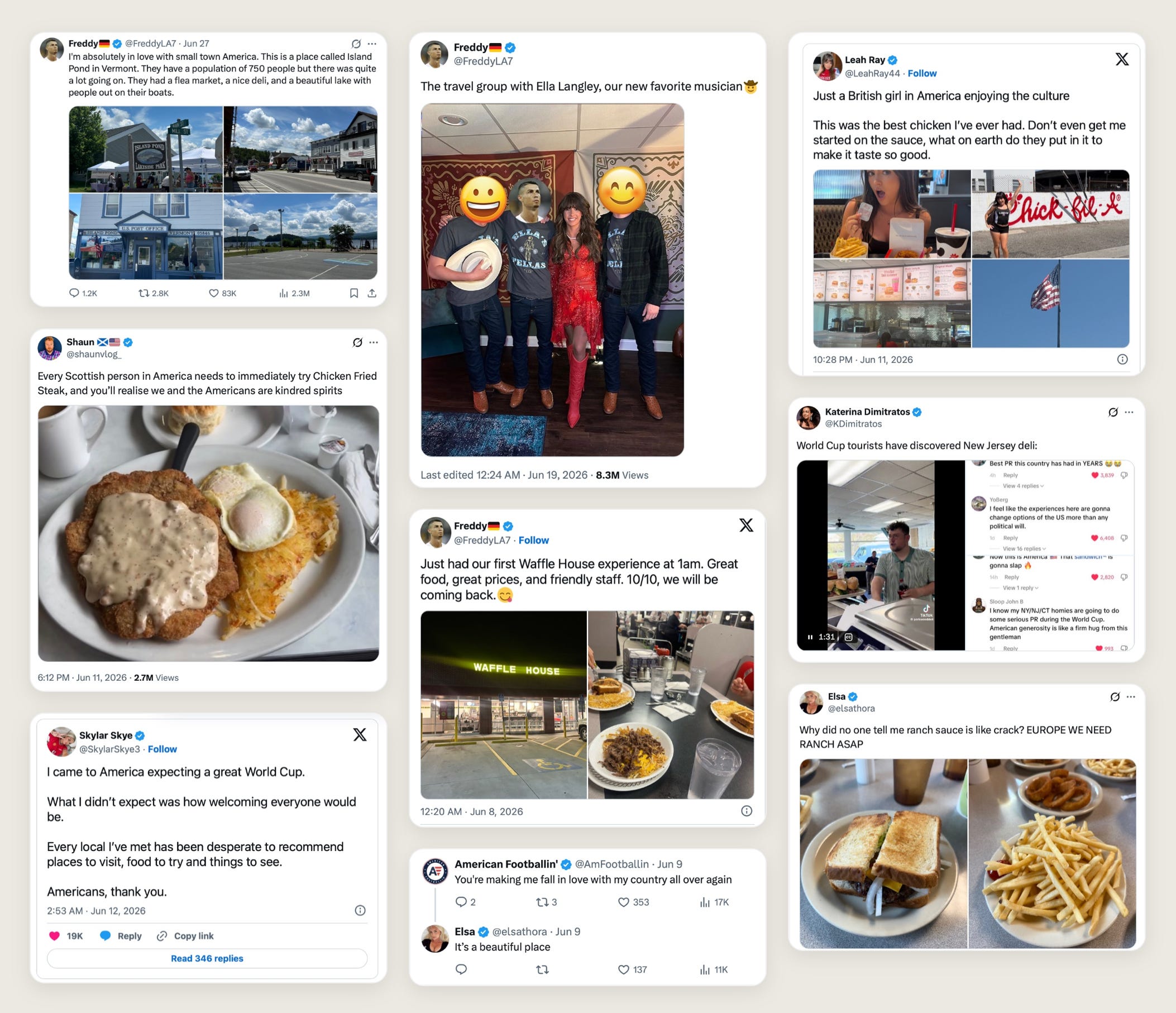
Scroll through World Cup posts and you’ll see Europeans road‑tripping through the South, treating Buc‑ee’s like a pilgrimage stop, wandering Walmart aisles in amazement, discovering Waffle House at two in the morning, and filming Big Gulps, ranch dressing, chicken‑fried steak, and yellow school buses like they’re part of the attraction. Everyday American life — the stuff most Americans barely notice — is seen through fresh eyes.
In Kansas City and its suburbs, Dutch fans are getting a crash course in American scale. They’re driving past sprawling houses and two‑car garages, and walking through Costcos and Home Depots that feel comically oversized to their European mind. A Dutch supporter summed up the vibe in a single line: “It’s spacious… people are so rich here. I think that’s why they can be so nice.”
In Dallas, Dutch and Japanese fans walked out of a World Cup draw calling the atmosphere inside AT&T Stadium electric. They talked about the size of the place, the noise, the spectacle, the air‑conditioning, and the friendliness of the crowd. The same stadium and spectacle the media tends to dismiss as over‑the‑top reads, to them, like proof that this is still a country that knows how to put on a show —and pull strangers into it.
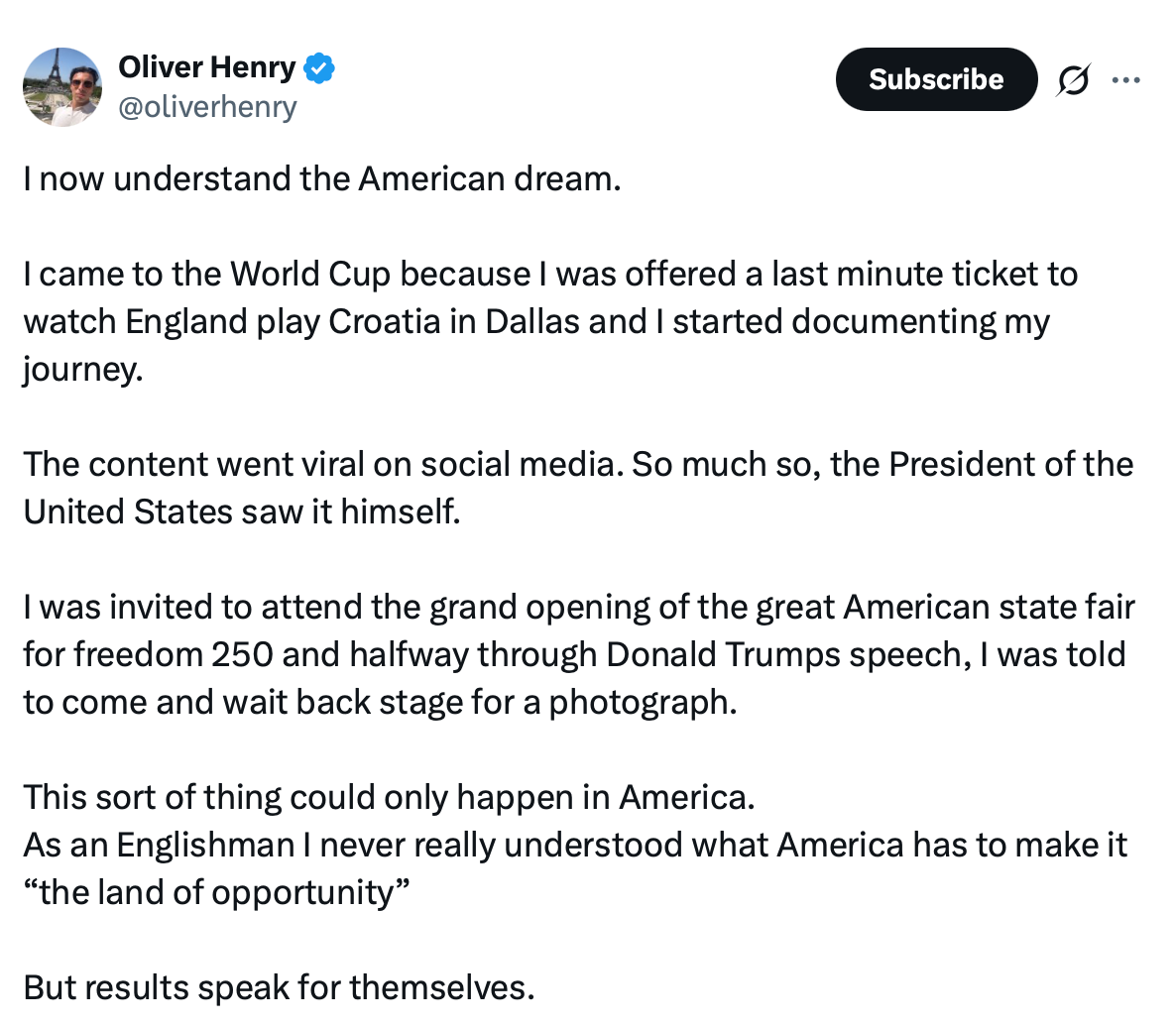
That’s the point. The draw isn’t that Buc‑ee’s or Jerry World are sacred spaces. It’s that visitors keep stumbling into a country that still builds things big, welcomes visitors in and turns ordinary moments into shared experiences almost by reflex. Watch enough of those clips and interviews and you notice something: the people flying in for a few weeks often sound more enthusiastic about America than Americans (and particularly Democrats) are encouraged to sound themselves.
Where the Future Gets Built
The narrative gap gets even clearer when you follow the builders. Despite a constant negative drumbeat from the media, entrepreneurs from around the world still overwhelmingly choose to build their companies here.
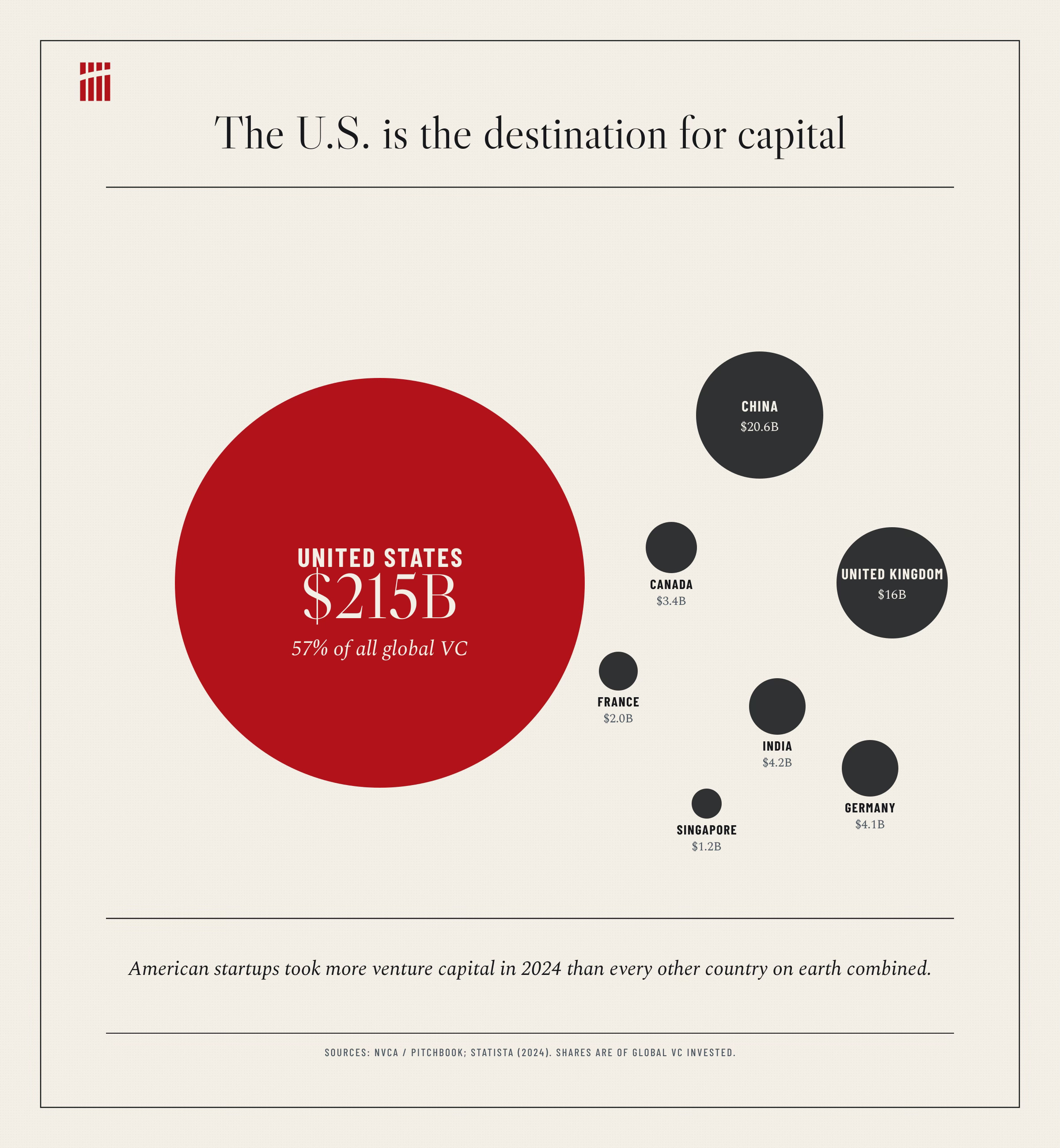
The United States is, by a wide margin, the largest startup ecosystem on the planet. Silicon Valley still defines the frontier in technology. New York is still one of the world’s financial capitals. Austin, Miami, Nashville, Boston, and a long list of other cities keep attracting founders, engineers, researchers, and investors who could plant their flag and build the workforce almost anywhere else.
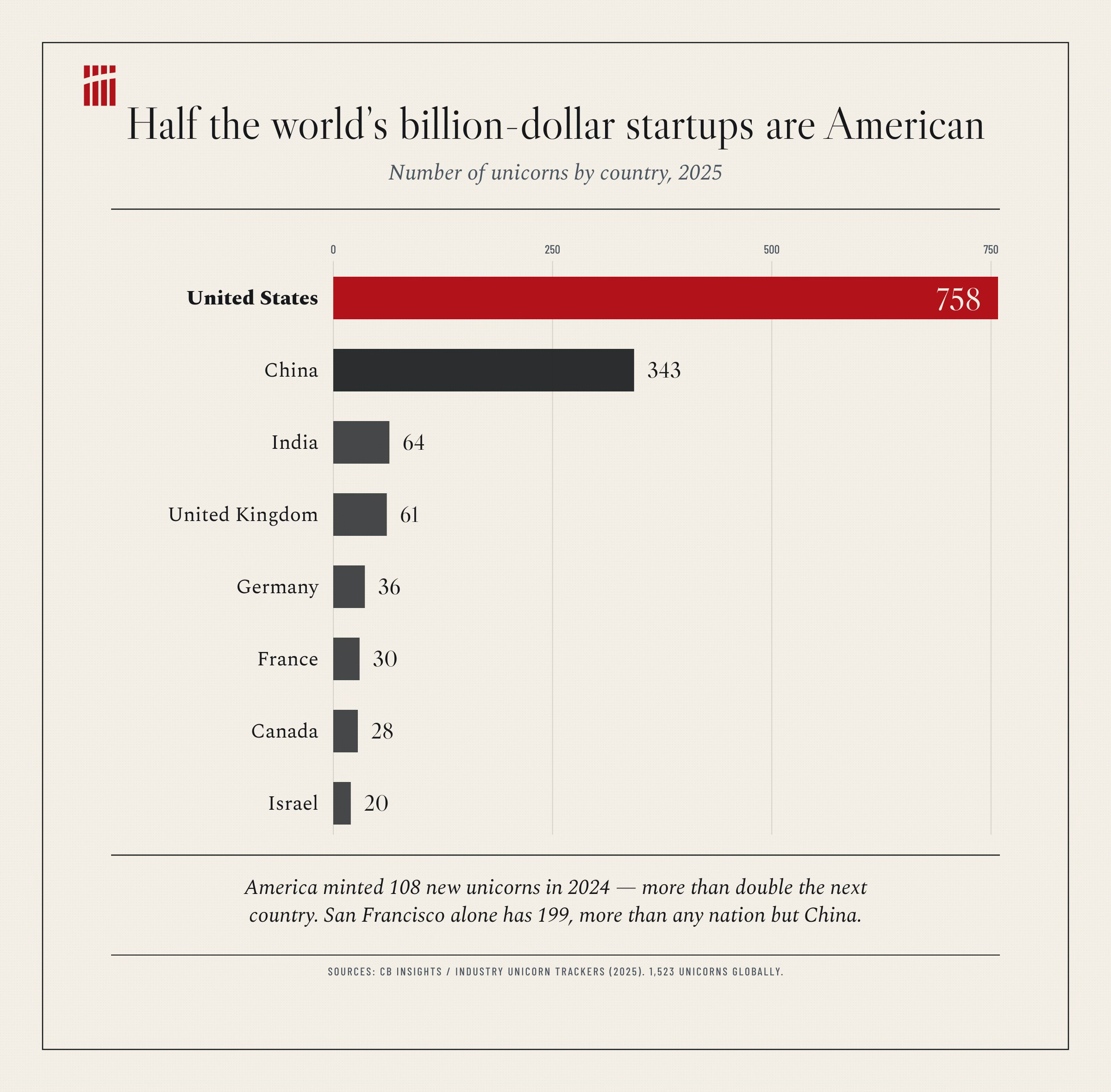
Markets don’t care about the doom and gloom narratives; they care about opportunity. The fact that so much talent, capital, and ambition continues to concentrate here is a clear vote that this remains the best place in the world to try something hard — and scale it if it works.
Generosity At Scale
The same media disconnect shows up in civic life. In 2025, Americans gave nearly $600 billion to charity for the first time ever. That wasn’t a government program or a corporate marketing stunt. It was millions of individuals, families, businesses, and foundations deciding to support churches, schools, hospitals, food banks, universities, disaster relief, medical research, local nonprofits, and a long list of other institutions.
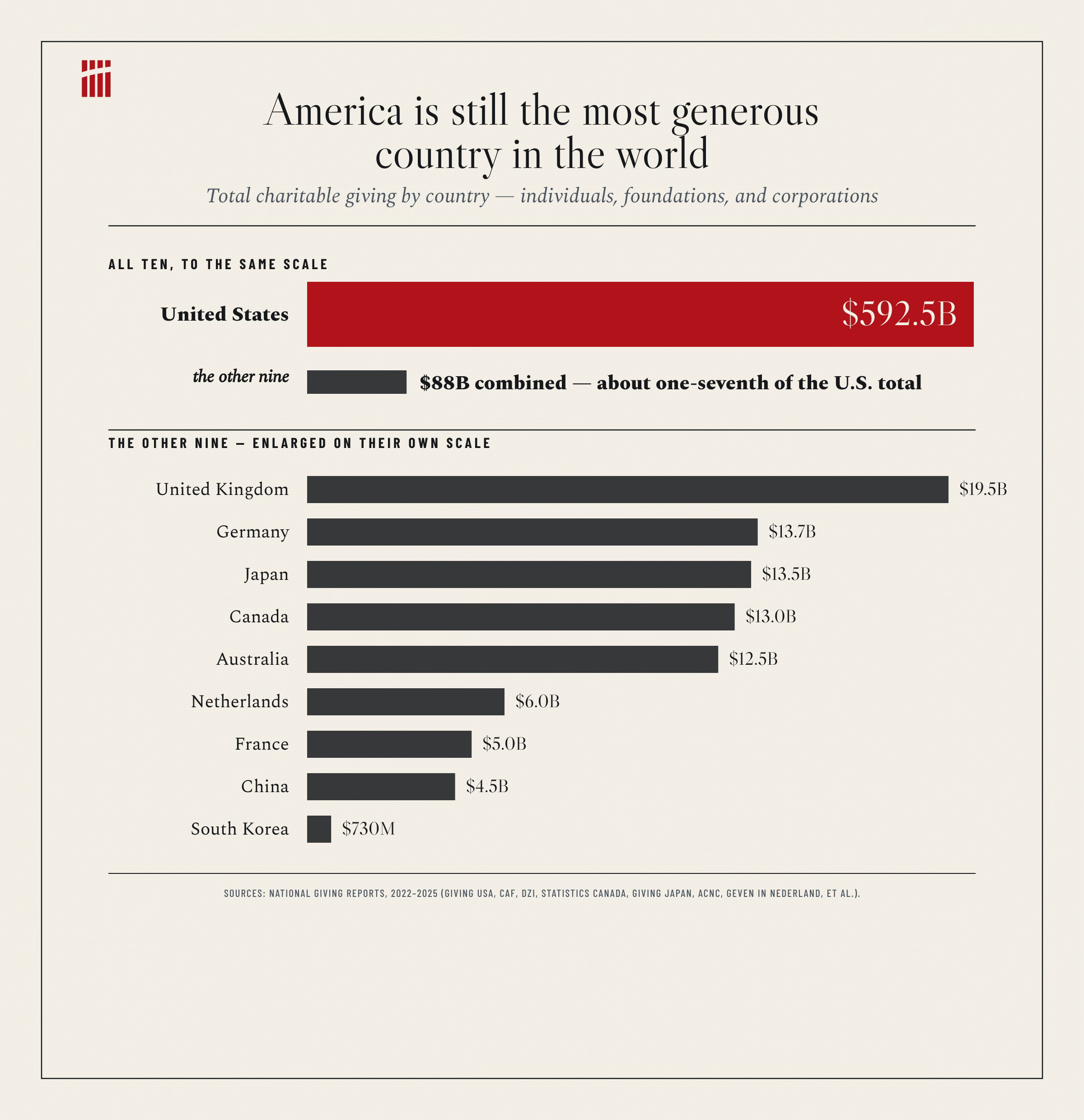
Despite the negative headlines, America is still one of the most generous societies in history — not just because it’s rich, but because generosity is deeply woven into the American character. That’s something to be proud of.
The Country People Still Choose
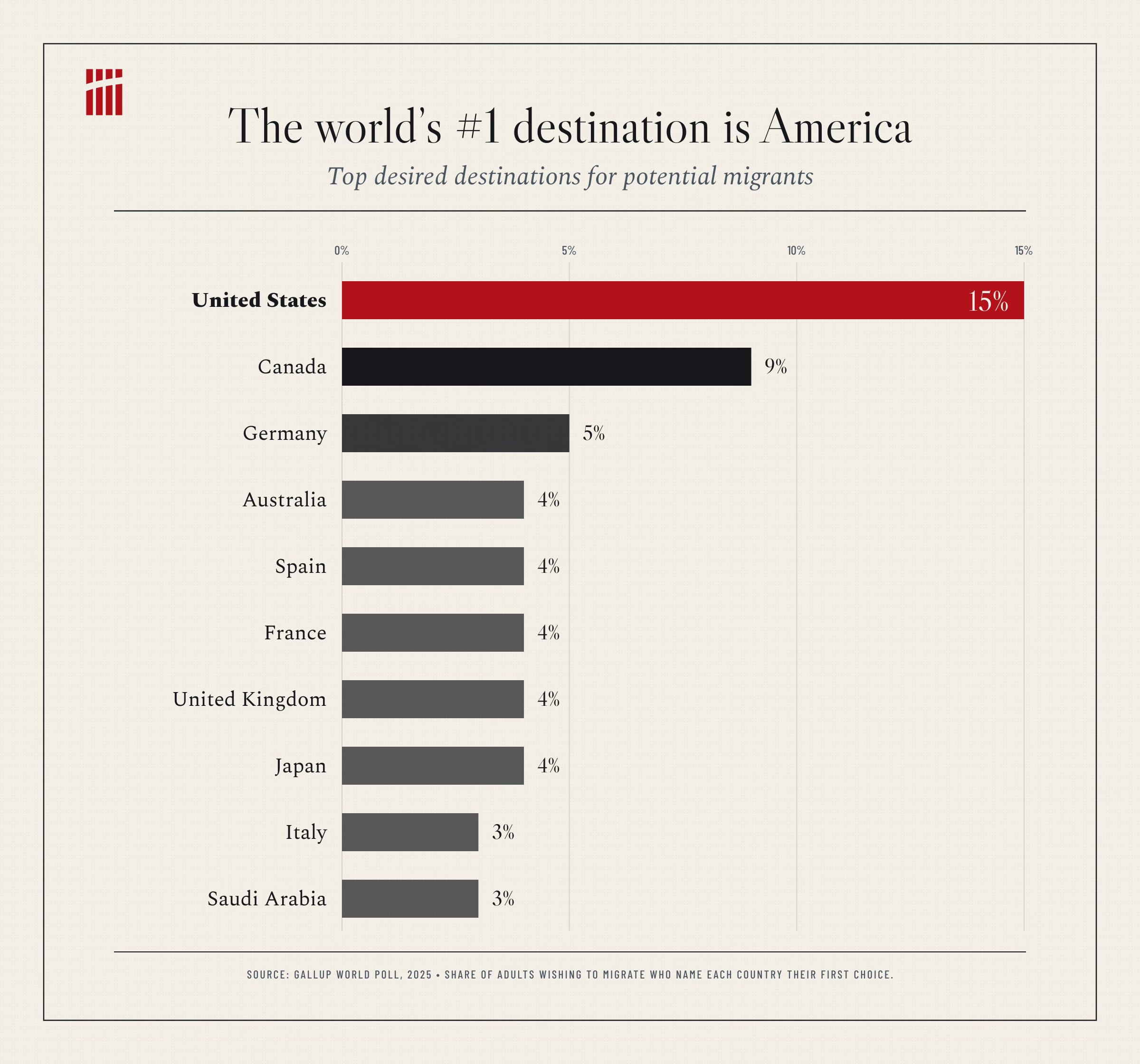
Maybe the simplest test of how much confidence a country inspires is how many people want to move there. For years, Gallup has asked people around the world: if you could move permanently to any country, where would you go?
The answer, more often than not, is the United States. Whatever critics inside the country say, millions of people looking at America from the outside still see it as the place most likely to offer a better life.
Looking Past the Headlines
Put all of this together, and you get a stark gap between the America the media describes and the America that’s clear from on-the-ground experience. The dominant story increasingly tells Americans to look at their country through a single lens — embarrassment and decline. Every setback becomes proof that the whole project is failing, and every success gets treated as a curious exception.
The country’s structural and inherent strengths tell a very different story: America is still the most remarkable and widely prosperous country ever built. In no other society ever — not the Roman Empire, Ancient Egypt, Renaissance Italy, the Han Dynasty or any other great civilization — was prosperity and security as widely spread as it is in 21st century America. Irrespective of the whining from the DSA crew, the fact remains, the poorest US state has a higher GDP per capita than almost every single other European country.
Unplugging from the negativity matrix doesn’t mean pretending we have no challenges. It means choosing to notice what’s right in front of us: the sun is shining, the stadiums are full, this country is still where people come to build and give and start over, and it still feels pretty good to have a Coke and a smile at the Great American State Fair. That’s a story worth telling and celebrating. Happy Fourth of July and Happy 250.
This is excellent!