



On Our Radar
Britain’s Stability Problem
A debate is emerging among scholars who see Western Europe edging toward a quieter, more fragmented style of civil strife. Few have been more direct than King’s College historian David Betz, who believes Britain has already crossed an early threshold. His warning is built on patterns recognizable across modern states under strain: fragmented policing, brittle infrastructure, and a widening gap between what governments promise and what citizens believe they deliver.
Betz’s most provocative claim is that the next British civil conflict wouldn’t resemble a clash of armies but a grinding, decentralized campaign against the systems that keep the country functioning. Whether or not his bleak scenario comes to pass, the attention his work has drawn speaks to a deeper unease: many Europeans now sense that their postwar assumptions about stability and cohesion may no longer be guaranteed.
California Wine Hits Its Breaking Point
California’s wine country is facing its most painful reset in a century, and the stress is showing first in the vineyards. Growers who spent decades riding steady demand are now confronting a collapse driven by shifting consumer habits, a glut of unsold grapes, and geopolitical shocks that cut off their most reliable export market. The pandemic boom disguised just how quickly American drinking patterns were changing, and the industry kept planting for a future that never arrived.
The crisis has forced growers into a kind of emergency improvisation: selling discounted grapes online, ripping out vines to rethink their crops, or refashioning their farms into tourism-centered experiences to lure younger drinkers back. Those moves can buy time, but they can’t resolve the deeper structural problem — a supply chain calibrated for relentless growth running headlong into a consumer market that’s diversifying faster than producers can adjust.
The Barracks Become a Trading Floor
A quiet investing boom is reshaping life on U.S. military bases. Across the services, young troops are pooling tips on tech stocks, comparing crypto wins, and chasing the momentum of a bull market that has inflated net worths at a pace few expected. The culture took root during the pandemic-era crypto surge — when bases accounted for many of the country’s highest crypto-trading ZIP codes — and has only deepened as AI stocks and bitcoin continue to climb. With job security, steady pay, and long stretches of downtime during deployments, service members have embraced trading as both a competitive outlet and a pathway to wealth that military salaries typically don’t provide.
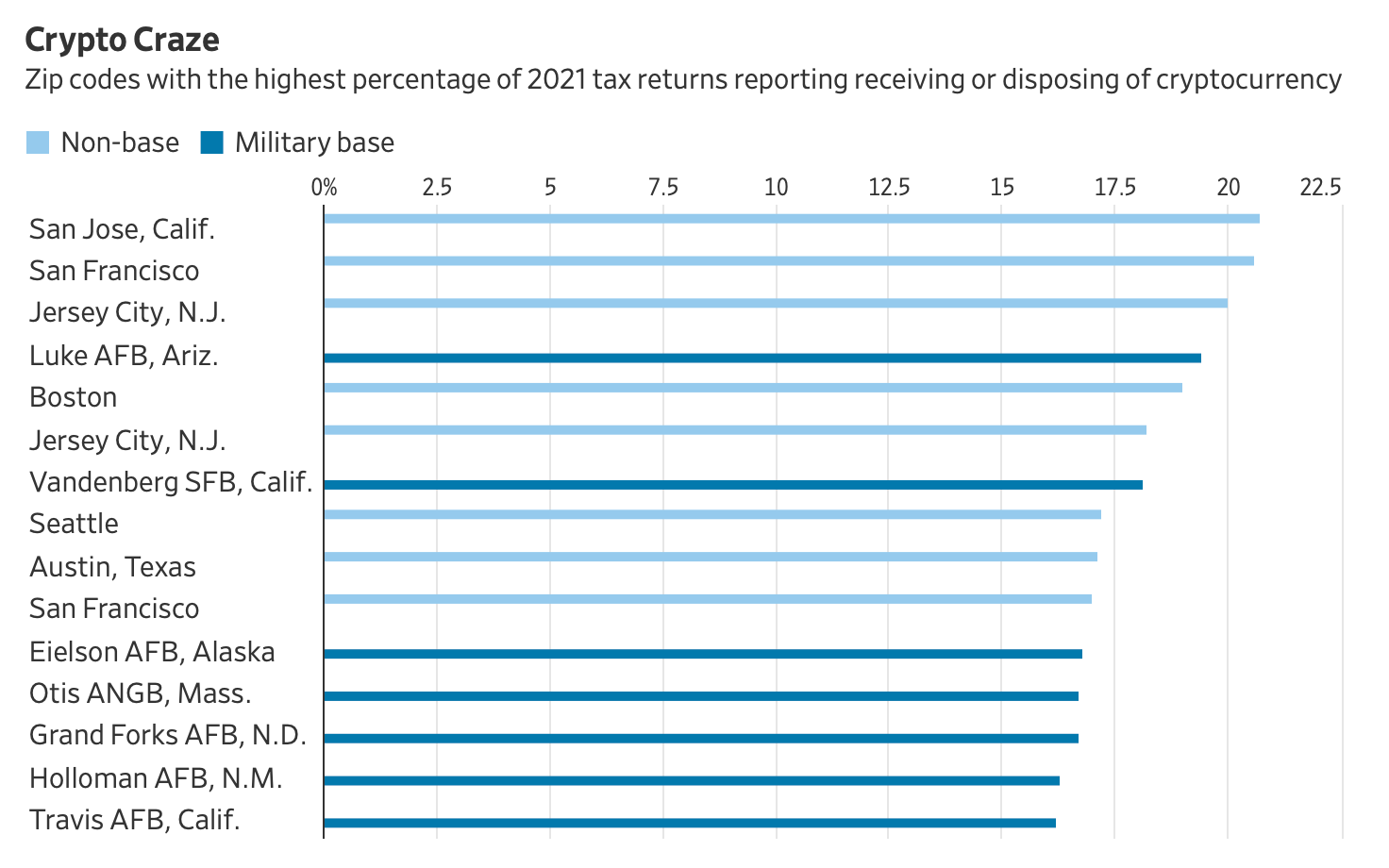
But the same conditions fueling the boom (youth, risk tolerance, and a market dominated by a handful of tech firms) also raise the possibility of a painful reckoning. Many troops have built portfolios around concentrated bets, short-term trades, or high-volatility coins without the usual hedges or caution that come with experience. Advisors warn that if the broader market stumbles, the financial hit for thousands of young service members could be severe.
The Blue-Collar Boom
The AI build-out has created one of the most unexpected labor windfalls in the country: a surge of six-figure jobs for the trades. Data-center construction, once a niche segment of commercial building, has become a modern gold rush. Electricians, welders, concrete crews, and project managers are being pulled into multiyear build cycles where pay is higher, schedules are steadier, and perks look more like what tech campuses offer than traditional job sites.
The result is a rare moment of leverage for workers in an industry that has long lived with seasonal uncertainty and chronic shortages. Some are traveling cross-country for premium pay; others are seeing their earnings double without leaving home. Even unions are swelling with new apprentices drawn by the stability and upward mobility tied to data-center projects. No one knows how long the boom will last, but for now, AI’s physical footprint is reshaping livelihoods and proving that technological revolutions still depend on human hands to build them.
Engineering Rain in an Age of Distrust
Cloud seeding has long been a quiet tool of Western water policy, but Rainmaker — a young startup blending drones, advanced sensors, and AI forecasting — has turned a once-obscure practice into a flashpoint. At the center is CEO Augustus Doricko, a 25-year-old who now finds himself navigating both worsening drought conditions and a rising tide of conspiracy theories accusing the government of secretly manipulating the weather. His company is trying to prove that modernized cloud-seeding can meaningfully bolster the Great Salt Lake’s dwindling water supply, but every scientific claim is met with online mobs, political scrutiny, and viral fringe accusations. The tension reflects a deeper unease: as the American West’s water supply becomes more strained, public distrust of institutions is rising just as new technologies require broad social consent to work.
Inside Utah’s water-management community, Rainmaker represents a promising but partial solution — one that could buy time for a region where drought, population growth, and agricultural demand are pushing the water supply to the brink. The stakes are high: if technologies like Rainmaker’s can be measured, regulated, and publicly understood, they may become part of a realistic long-term strategy for water resilience in the West.
Partner Spotlight
Imperium Partner Josh Helton Joins The Cylinder for a Hands-On Second Amendment Program


The Cylinder is a 501c3 organization dedicated to sparking a love of the Second Amendment among policy and thought leaders in the Executive Branch and inside major American companies. Since 2021, it has hosted 3–4 Carbine Course Policy Retreats in Nashville every year, where a select group of attendees — including Imperium Partner Josh Helton during a recent weekend program — have the opportunity to learn about the Second Amendment and receive a hands-on two-day training on the AR-15 platform from former Tier 1 special forces operators.
These small groups always include executives from firearms manufacturers as well as leaders from major 2A advocacy groups. Founded by veterans of the first Trump West Wing, The Cylinder also hosts events in DC that give its alumni the opportunity to meet current and former Administration officials.
Other Reading
Michael and Susan Dell donate $6.25 billion to encourage families to claim ‘Trump Accounts’ (Associated Press)
Sean Duffy Is Right (The What For)
Strategy Cuts Outlook, Establishes $1.44 Billion Reserve Amid Bitcoin Selloff (The Wall Street Journal)
Why Traditional Media Is Experimenting With Substacks (Puck)
An AI Healthcare Vision (8VC)
Trump’s Boat Strike Playbook Was Written by Obama (The Washington Post)
Talkin’ Tennessee (The What For)
Survey Shows the Right Republicans for the GOP (City Journal)
U.S. Government to Invest $150 million in Lithography Startup (Axios)
Warner Bros. Discovery Makes a Deal With Netflix (The New York Times)
NFL Scorigami: the Weird Magic of a 36–23 Final Score (The Atlantic)
Dynamic Pricing Is Becoming the Rule, Not the Exception (Fast Company)
Yes, Blowing Shit Up Is How We Build (Pirate Wires)
How TBPN Ads Turned Jordi Hays and John Coogan Into a Brand (Axios)

The data center construction boom is one of those rare moments where the AI hype actually translates into tangible economic wins for people outside of tech. Six-figure electrician jobs and union apprenticeships filling up because companies need to physically build the infrastructure is proof that even the most abstract tech revolutions still need real labor. The irony is that everyone's worried about AI replacing workers when right now it's creating a shortage of skilled trades.