
On Our Radar
Building the New American Arsenal
Bari Weiss sat down this week with Anduril founder Palmer Luckey for a conversation that traced the arc of one of the country’s most unconventional defense entrepreneurs—from Silicon Valley exile to the helm of a $30 billion firm reshaping how America arms itself. Luckey, who built Oculus at 19 and was later fired from Facebook, has since turned Anduril Industries into the face of a new defense-tech movement, pairing autonomous systems, drones, and battlefield AI with an old-fashioned sense of urgency.
He spoke bluntly about America’s role in the world, arguing that the U.S. should stop trying to be “the world’s police” and instead become “the world’s gun store”—arming allies with the tools to defend themselves rather than sending Americans to fight their wars. For Luckey, the future of American power lies not in sprawling bureaucracies but in fast-moving companies willing to build what government can’t (or won’t).
Beyond SEO: How Generative Engines Are Rewriting the Internet
The battle for visibility online is shifting from Google to generative AI. WIRED reports that retailers could see a 520 percent surge in traffic from chatbots and AI search engines this holiday season, as shoppers turn to ChatGPT-style tools for product ideas and deals. In response, brands are adopting a new strategy: Generative Engine Optimization (GEO) — the next evolution of SEO for the age of conversational commerce.
Rather than gaming Google’s algorithm with long blog posts and keyword density, GEO favors structured, precise content designed for AI models that answer questions, not serve links. The overlap between top Google results and chatbot sources has already fallen below 20 percent — and this shift is forcing marketers to rethink everything from FAQs to data formatting, ensuring their brands appear in AI-generated recommendations. In the GEO era, visibility is no longer about ranking higher — it’s about being understood by the machines that shape what people see.
James Blair Maps Out the Road Ahead for the Trump Administration
Recent American Growth Partnership speaker and White House Deputy Chief of Staff James Blair revisited many of the themes he shared with AGP members several weeks ago — this time in a wide-ranging Fly Out Day interview on the shutdown, health care, and 2026 politics. Blair, who oversees legislative and political strategy for President Trump, said the White House has no plans to extend the enhanced Obamacare tax credits driving the current budget impasse, calling them “subsidies to insurance companies.” He added that the administration aims to use the standoff to launch a broader health-care overhaul once the government re-opens. Blair also noted that major pharmaceutical firms would be brought “to the table” to lower prescription costs, emphasizing Trump’s focus on affordability.
On the political front, Blair said the president remains actively engaged ahead of 2026, signaling continued investment in key races and priorities nationwide. With Trump preparing for an extended Asia trip, Blair’s remarks underscored an administration balancing immediate policy fights with the longer-term political groundwork for the next election cycle.
The Science (and Fiction) of Digital Immortality
FX’s Alien: Earth imagines a world where human consciousness can be uploaded into synthetic bodies — a transhumanist dream led by a barefoot billionaire genius. But real scientists aren’t convinced we’re anywhere close. Harvard physicist Hidenori Tanaka says the feat would require mapping every neuron in the brain, a task researchers have only managed with fruit flies. Philosophers warn that even if it worked, the result might be a perfect copy—not the original self. Others fear a “digital immortality divide,” where only the wealthy could afford eternal life. For now, experts say the technology remains centuries away — but as AI and neuroscience converge, the line between mind and machine is starting to blur.
Tennessee Tops the Nation in Opioid Use Disorder
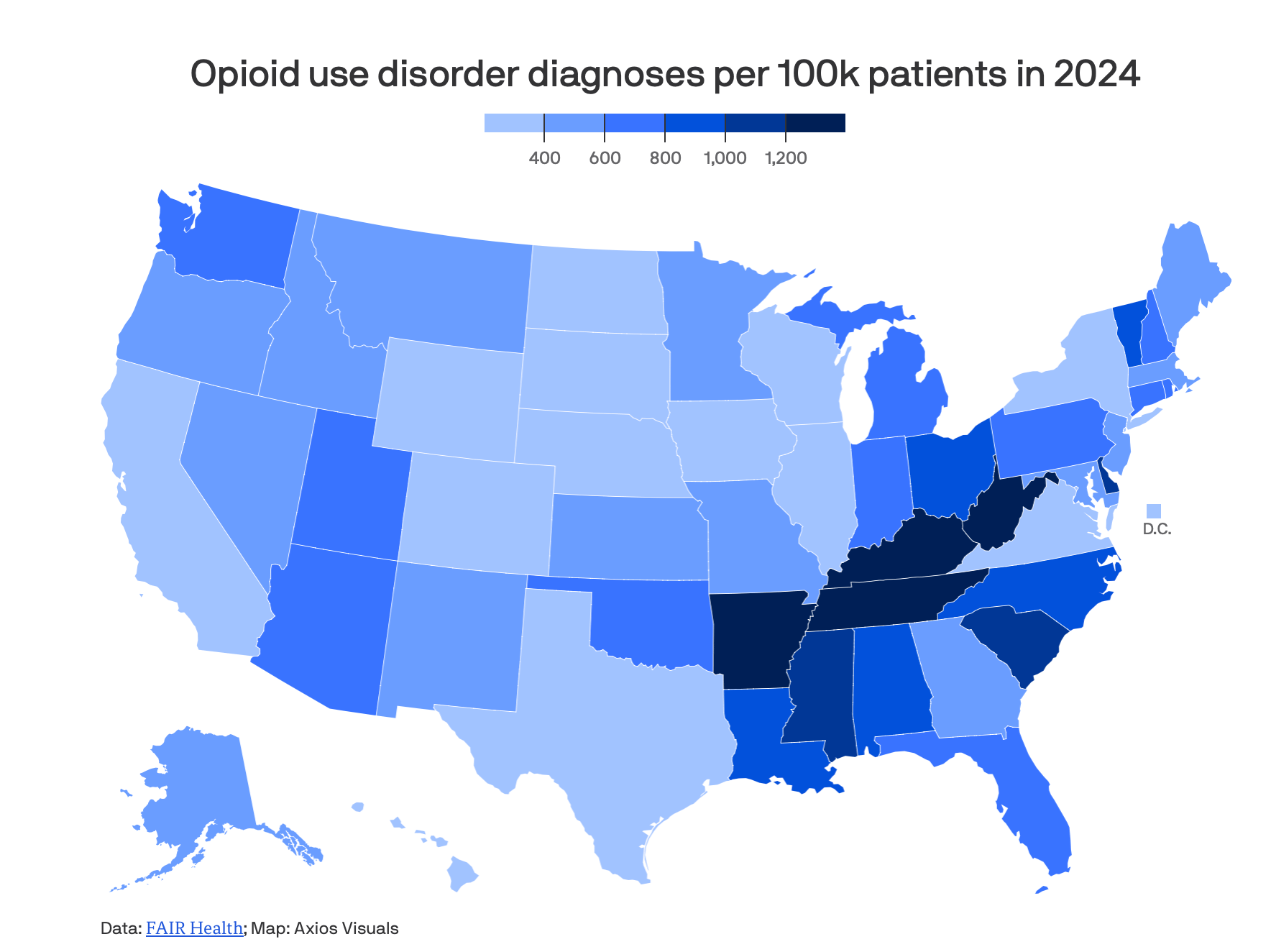
Tennessee now has the highest rate of opioid use disorder in the country, with 1,447 diagnoses per 100,000 patients in 2024—nearly triple the national average, according to new data from FAIR Health. The state’s rate has surged almost fourfold since 2021, underscoring a crisis that reaches every corner of the state. While fatal overdoses have declined slightly, nearly 3,000 Tennesseans still died from opioid-related causes last year. State officials are channeling settlement funds through the Opioid Abatement Council to expand treatment programs and access to naloxone, placing emergency doses in public spaces from schools to stadiums. The challenge ahead is not only sustaining these interventions, but rebuilding the systems that failed to catch so many in the first place.
Other Reading
Things Worth Remembering: The Truth Eludes Even Old Men (The Free Press)
Democratic Donors Sit on Sidelines as Party Schism Persists (WSJ)
Toyota Officially Positions Century Above Lexus as Its Flagship Brand (Car and Driver)
The Long Tail of the AWS Outage (Wired)
Why We Still Need Plato (Old School with Shilo Brooks)
Apple Should Make Lamps (Pirate Wires)