This week's stories show America rebuilding the capacity to build. Cheap drones are rewriting the economics of war, and a new wave of startups and engineers is racing to adapt. Tennessee just cleared a milestone for next-gen nuclear, reviving something the country once did better than anyone. And Trump is renovating Washington to match American ambition. Plus, Detroit's EV hangover, the OpenAI advantage, and a mid-air near-disaster stopped by an unlikely hero. Here's what we're watching:
On Our Radar
The New Economics of War
Three thousand years ago, iron changed warfare for one simple reason: it was everywhere. Making bronze depended on scarce inputs and trade networks that favored wealthy empires, while iron could be produced locally and turned into weapons by much smaller players. Drones are doing something similar today. Ukraine is already showing what that looks like on the ground, with startups and military engineers building cheap drones and autonomous systems that can threaten tanks and artillery worth millions.
That leaves the United States with a serious question: can a defense establishment built around expensive weapons and long development cycles adapt to a world where the battlefield changes this quickly? On November 18, Vanderbilt University’s Institute of National Security will bring that question to Washington with its inaugural Convening in the Capital: Autonomy at Scale. Former Google CEO Eric Schmidt and former Ukrainian Minister of Strategic Industries Oleksandr Kamyshin will join leaders from across national security to tackle how America can take the lessons emerging from Ukraine and transform our defense industrial base to keep pace.
Detroit’s EV Hangover
America’s car dealers have a problem: they need new cars, but automakers don’t have any to ship. Carmakers are expected to redesign just 9% of their lineups from 2026 through 2028, well below the 20-year average of 14%. The drought is a hangover from the industry’s huge bet on electric vehicles. Automakers poured billions into EV platforms while putting off gas-powered models, only to find out that’s not what consumers wanted.
Car companies can’t change direction overnight. New models take years to develop, factories have to be retooled, and supply chains have to catch up. So dealers are left selling aging designs while automakers try to keep things fresh with retro editions and ever-more-specific trims. Updated options are on the way, but most won’t arrive until 2028 or later. The industry spent years racing toward the future; now it’s trying to catch back up with what buyers want today.
The Builder in Chief
Donald Trump is putting his stamp on Washington in a way few modern presidents have. The White House is getting a new ballroom and security complex, the Rose Garden has been reworked, and Trump wants to add a triumphal arch and a National Garden of American Heroes. Critics overlook the fact that Washington has never been a finished city. Theodore Roosevelt built the West Wing, Franklin Roosevelt expanded the White House complex, and Harry Truman effectively rebuilt the mansion from the inside out. Presidents have been reshaping the capital for more than two centuries.
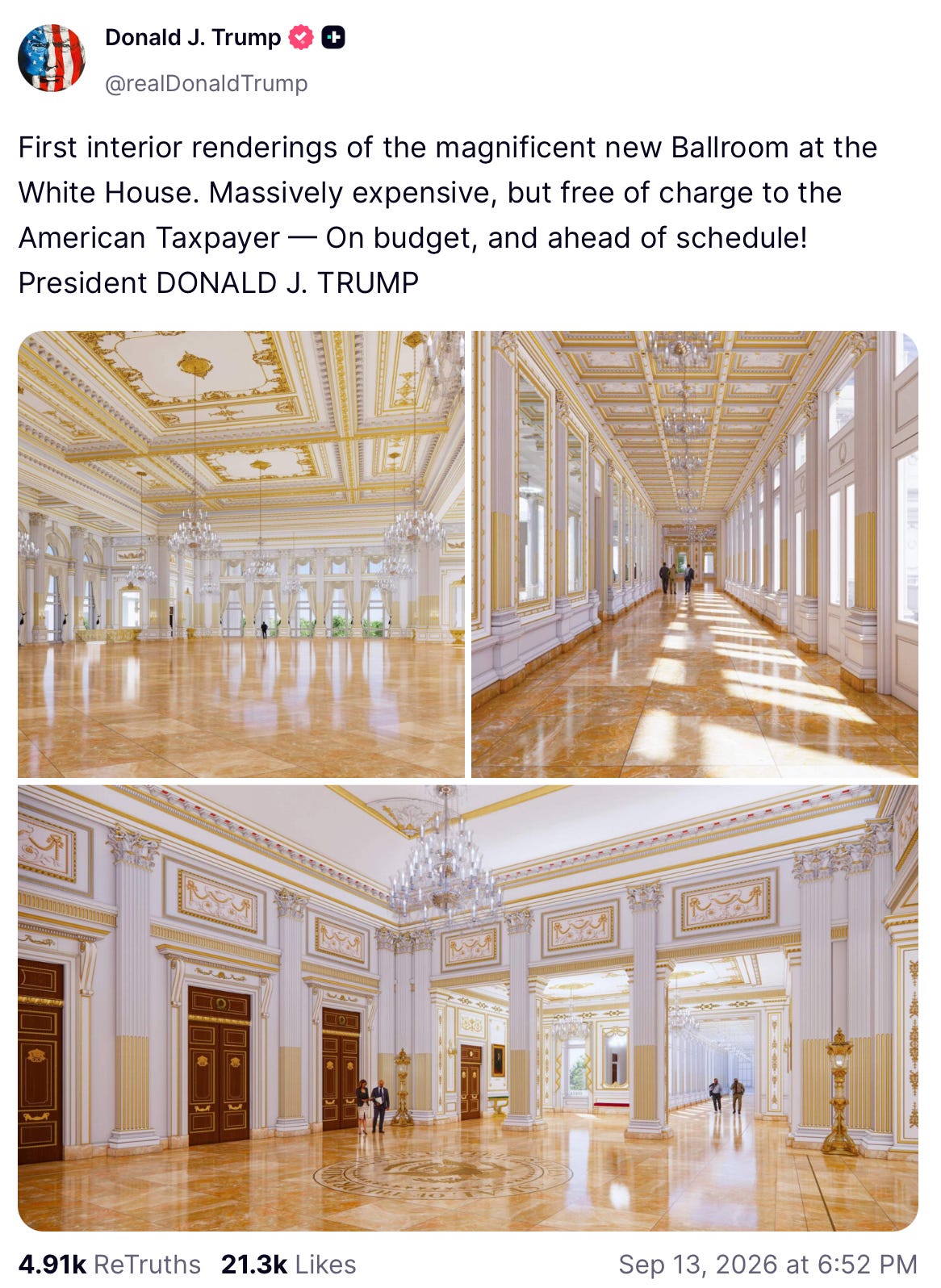
Trump’s changes are more ambitious than most recent presidents’, but that’s part of the point. Washington is the capital of the world’s leading power, but parts of it have spent decades looking neglected and dated. Trump has a different idea: a capital that looks monumental again and isn’t shy about celebrating the country that built it.
Client Spotlight: Goldfinch Health
Imperium client Goldfinch Health joined healthcare leaders in Texas this week for CHOICE in Action, a conversation with CMS Administrator Dr. Mehmet Oz, SBA Administrator Kelly Loeffler and employers about new approaches to health benefits. The event focused on the growing use of CHOICE Arrangements, which give employers an alternative to traditional group health plans by contributing toward employees’ individual coverage. Goldfinch was on hand as policymakers and businesses explored how greater flexibility and competition could help employers manage rising healthcare costs while giving workers more control over their coverage.


Nuclear Comes Back to Tennessee
Tennessee just cleared a major milestone in America’s nuclear comeback. The Nuclear Regulatory Commission gave the Tennessee Valley Authority permission to build a small modular reactor at its Clinch River site near Knoxville — only the second next-generation commercial reactor approved for construction. The hope is that smaller, standardized reactors can avoid the cost overruns and endless delays that have defined big nuclear projects, while delivering the always-on power America will need for AI data centers and a growing economy.
The country’s nuclear edge was built through places like Oak Ridge and Los Alamos, where government-backed science took on problems too large and too consequential for private industry alone. TVA still has hurdles to clear, but the approval is a sign that America is trying to rebuild something it once did better than anyone: turn world-class science into the infrastructure that keeps the country moving forward.
The OpenAI Advantage
Andreessen Horowitz thinks OpenAI may have figured out something more important than having the best model. Models leapfrog each other constantly, prices keep coming down, and switching from one to another is simple for users. What’s much harder is getting people to use AI for something they weren’t doing before. OpenAI did that with ChatGPT. A chatbot sounded almost trivial when it launched, then hundreds of millions of people started using one. A16z argues OpenAI has been unusually good at finding those simple ideas that suddenly make AI useful to a much bigger group of people.
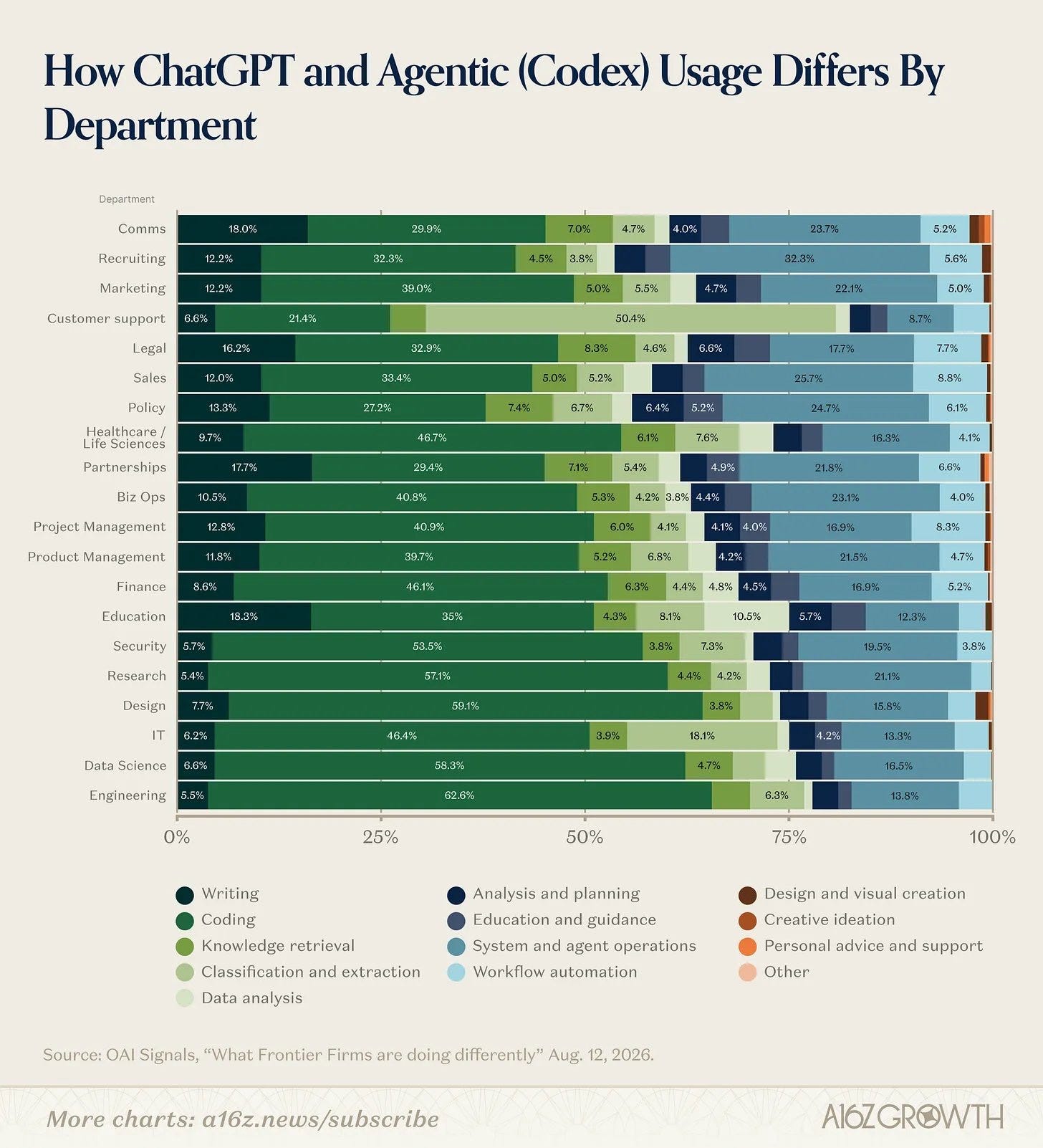
The company wants ChatGPT to be the place you go when you need something done, while also building the platform businesses and developers can build on themselves. The more people who use it, the more chances OpenAI gets to see what catches on next. Models will keep changing and competitors will keep catching up. A16z’s bet is that getting people to form entirely new habits around your product will prove much harder to copy.
The Passenger in the Pilot’s Seat
A Flydubai flight from Dubai to Tel Aviv nearly ended in disaster this week after one of its pilots stabbed the other and sent the plane into a nosedive. The aircraft dropped more than 17,000 feet in roughly two minutes before the injured pilot managed to fight back and open the cockpit door. Passengers and crew rushed in, overpowered the attacker and eventually helped get the plane safely on the ground in Saudi Arabia.
One of them was Yaniv Hayoun, an Israeli father traveling with his wife and children. Hayoun told The Free Press that he ran toward the cockpit when the plane started plunging, helped wrestle the attacker out and put him in a chokehold while other passengers restrained him. Then, with nobody at the controls, Hayoun went back into the cockpit and pulled up on the yoke until another pilot arrived. He has no aviation or security background, but said he knew what to do from an episode of Air Crash Investigation. All roughly 180 people aboard ultimately made it safely back to Israel.
Other Reading
Manchester City have become ‘Sham FC’. They deserve the heaviest punishment (The New York Times)
MAHA Versus the Machine (The Free Press)
Defense Firms Are Rushing to Boost Missile Output. It’s Coming Too Late. (The Wall Street Journal)
Blackburn Calls On TN To ‘Bring Back’ Electric Chair After Botched Christa Pike Execution (The Hill)