



This week's edition tracks builders working in pockets everyone else overlooks. Brad Smith took a healthcare company to the top of the Inc. 5000 — for the second time in three years. American Growth Partnership hosted the Department of War's CTO, a former tech exec now spearheading innovation at the federal level. And Davis Hunt built an independent local publication in a city being remade by growth.
Plus, the social media bans running into reality, America's 10,000-name history, Silicon Valley's search for "taste," and the rise of cancer among adults under 50. Here's what we're watching:
On Our Radar
Social Media Bans Meet Reality
Politicians around the world are waking up to the reality that the kids aren’t alright. Governments are rushing to ban or age‑restrict social media for minors, from Australia’s under‑16 social media ban to proposals across Europe and beyond. The political appeal is obvious: promise to protect kids, take on Big Tech, and answer years of mounting anxiety over what social media is doing to young people.
But eight months into Australia’s first-of-its-kind ban, more than 80 percent of under‑16s are reportedly still on social media. That’s pushing the debate toward a different question: instead of trying to keep teenagers off the internet, why not change the products they’re using? Brazil, the EU, and Canada are moving in that direction, targeting addictive features like endless scroll and targeted advertising. The pressure is now shifting onto the platforms themselves, and whether companies built around capturing teen attention should be held responsible for the real‑world consequences of those design choices.
American Growth Partnership Hosts Department of War CTO
American Growth Partnership (AGP), co-founded by Imperium partner Josh Helton, hosted a roundtable in Washington, D.C. with Emil Michael, Under Secretary of War for Research & Engineering and Chief Technology Officer for the Department of War. The discussion brought AGP members together for a conversation on how emerging technology is being adopted across the Department, including its role in acquisition, the defense industrial base, and capability development.
His appointment is another example of the Trump Administration lowering the old barriers between government and industry. Instead of sidelining people who’ve built things in the private sector, it’s putting them in key roles on emerging tech in the defense enterprise — so builders can move faster on America’s interests without getting buried in bureaucracy, and keep national security front and center in an era when the countries that win are the ones that ship better technology, faster.
America’s 10,000-Name History
More than a century ago, the federal government nerded out on a single topic: how America’s towns got their names. The result was a 334‑page survey tracing the origins of roughly 10,000 place names, and it reads like a map of the country’s past. Dutch names cluster around New York, French names follow old trading routes along the Mississippi River, Spanish names dominate the Southwest, and Native names sprawl across huge swaths of the country.
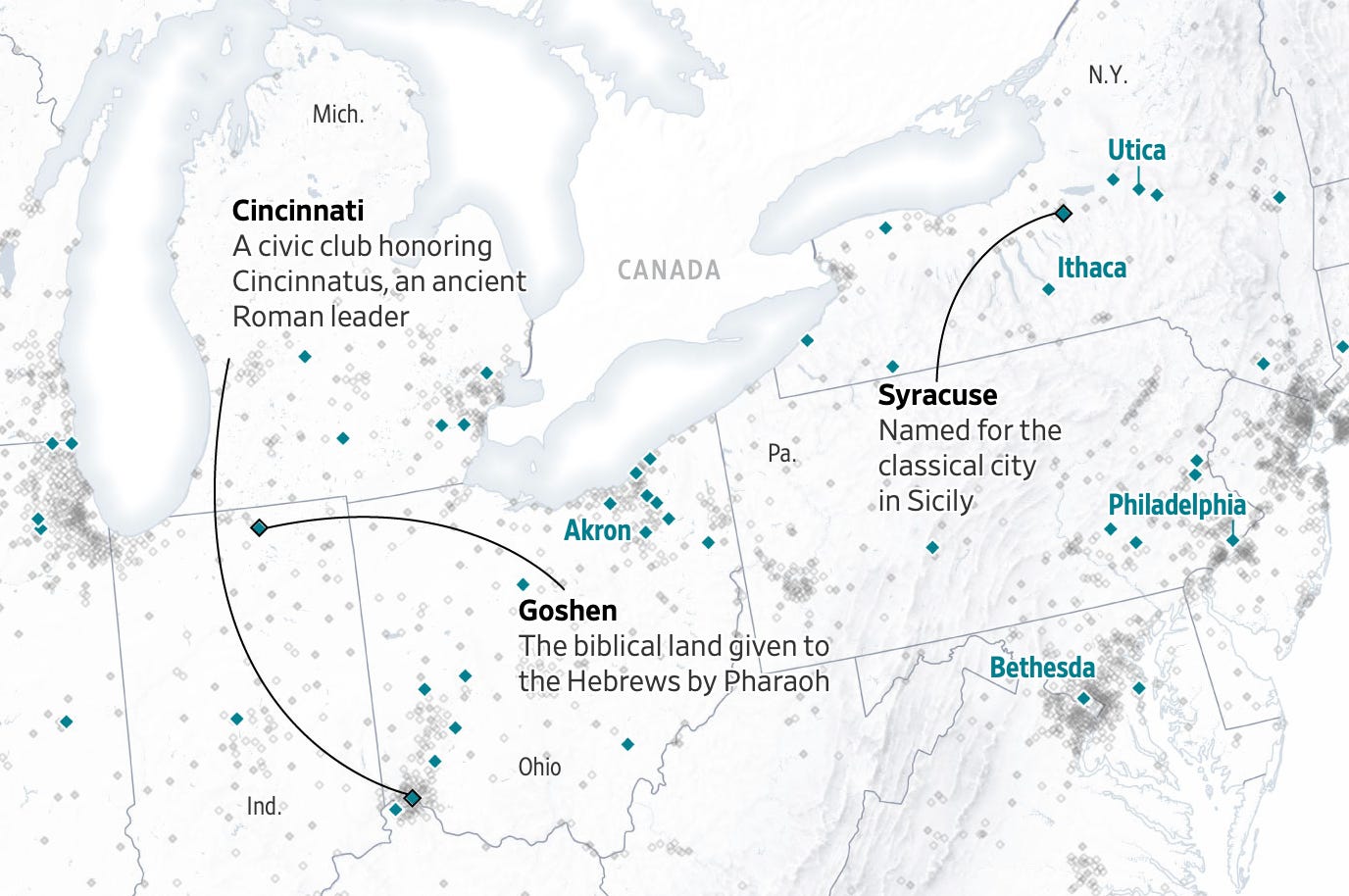
Then there are the Americans who just borrowed from everywhere. After the Revolution, settlers heading West pulled from the Bible and the ancient world for Ithaca, Troy, Lebanon and Cincinnati, and others named towns after battles and heroes of the Revolution. The survey has its mistakes and blind spots (it was stitched together by mail in the early 1900s) but at 250, America’s map still carries a visible record of who settled where and what they wanted their new communities to become.
Client Spotlight: Brad Smith’s Main Street Health Tops the Inc. 5000
A Nashville healthcare company just became the fastest-growing private company in America. Imperium client Main Street Health topped this year’s Inc. 5000 after growing an eye-popping 546,533% (yes, you read that right) in three years and bringing in nearly $4 billion last year. Its model is straightforward: partner with small-town doctors, give Medicare patients dedicated health navigators to help coordinate their care, and share in the savings when those patients stay healthier and out of the hospital.
Main Street is the second company co-founder Brad Smith has taken to No. 1 on the Inc. 5000 in just three years, after CareBridge claimed the top spot in 2023 and later sold for $2.7 billion. Along with earlier venture Aspire Health, Smith and a recurring group of Nashville healthcare entrepreneurs have spent more than a decade building companies around overlooked corners of the healthcare system. Main Street’s success is another reminder that some of the country’s most interesting healthcare innovation is happening here in Nashville — and at a scale other firms can’t keep up with.
Silicon Valley’s Search for Taste
Silicon Valley has spent the past few years treating “taste” like the one human skill that survives AI — the thing that still matters when models can write code, design products, and spin up content on demand. Founders quote Rick Rubin and tweet Paul Graham lines about taste as a new moat. The story sounds intuitive: when anyone can make anything, the real advantage is knowing what’s worth making. But tech writer Celine Nguyen pushes back on the idea that taste is some innate gift reserved for a lucky few.

A point of view is built over time through exposure, imitation, critique, and the people whose judgment we learn to trust. Editors and critics shape it; friends, teachers, mentors and cultural institutions keep refining it. That’s a useful correction in an AI-heavy world: taste might be harder to automate than production, but it isn’t magic. If companies want employees with a more dialed in perspective, they may need to spend less time hunting for people who supposedly “just have taste” and more time creating environments where people can actually develop it.
A New Model for Local Media
Our conversation series continues this week with a look at the changing landscape of local media. This installment features Davis Hunt — a Nashville native with a background in tech and entertainment, who launched The Pamphleteer in 2021 to bring a fresh, unapologetic perspective to local government, development, and culture.

Hunt sat down with Imperium partner Clint Brewer to talk about building an independent publication, the economics of local media, and what it means to cover a home city being rapidly transformed by growth. Five years in, he holds some sharp, contrarian views on where media is heading — from why influencer trust has already peaked to why institutions and mastheads may be due for a comeback.
Cancer’s Demographic Shift
Cancer is still overwhelmingly a disease of aging, but that pattern is starting to shift. Since 1990, diagnoses among adults under 50 have been rising across a range of cancers, with some age groups seeing increases of several percentage points a year. Better screening doesn’t seem to explain it all: younger adults aren’t routinely screened for many of these cancers, and mortality rates for some are rising too.
What’s driving the increase is still unclear. Scientists are looking at familiar suspects like obesity, alcohol and diet, while also digging into environmental exposures and changes in how people live. There probably won’t be one neat explanation; cancer rarely offers a simple answer for why one person gets sick and another doesn’t. But as researchers start to see these trends more clearly, more people are facing cancer at the same time they’re building careers and families — and the first step in responding is to build more durable systems of care that actually fit their lives.
Other Reading
Exclusive: On the defense-tech road with Jamie Dimon (Axios)
Local water utilities are under cyber attack. A new group wants to help (Defense One)
GRAS overhaul: less onerous than feared, but legal battle likely (AgFunder News)
How to Talk to God (Vijay Pande)
Mamdani’s Honeymoon With New York Is Over (The Wall Street Journal)