On Our Radar
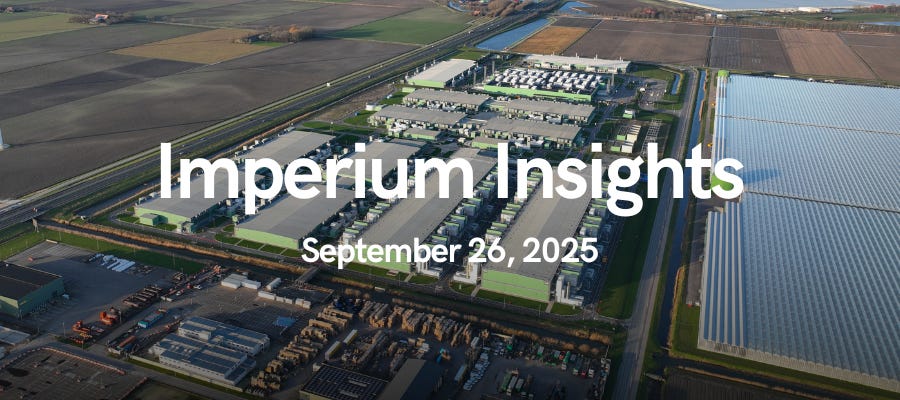
The AI boom has unleashed one of the most expensive infrastructure build-outs in history, with tech giants committing trillions to data centers, chips, and energy. Microsoft, Meta, and OpenAI are leading the charge, but revenue so far is a fraction of what’s needed to justify the outlays. Analysts warn of parallels to the dot-com and fiber optic bubbles, where overbuilding led to eventual collapse. Companies like CoreWeave, now valued higher than GM, are piling on debt to lease data centers and buy Nvidia chips, gambling that AI adoption will be explosive enough to cover debt obligations.
Safety Concerns Put U.S. World Cup Cities on Notice
President Donald Trump said U.S. host cities for the 2026 FIFA World Cup could lose games if he determines they are unsafe for players and fans. While crime-ridden cities like Chicago, Memphis, and Washington, D.C. aren’t on the host list, Trump said his administration’s deployment of federal resources will ensure safety nationwide. The comments inject politics into preparations for one of the world’s largest sporting events, where 11 U.S. cities—including Los Angeles, Dallas, and Miami—are slated to host matches. Trump insisted the games will go forward, but warned that venues could shift if security risks remain.
Abundance Without Meaning: The Modern West’s Paradox
Paul Kingsnorth argues in his new book Against the Machine that the collapse of the West’s Christian foundation has left a vacuum filled by consumer capitalism and rootless individualism. For 1,500 years, the biblical story shaped daily life, from work weeks to moral codes, but the Enlightenment’s dethroning of that sacred order hollowed out shared meaning. He argues that without a higher telos, society drifts into relativism, emotivism, and despair. The result: a civilization with unprecedented abundance but little sense of purpose.
The Fastest Production Car Ever Built Is Now a Chinese EV
China’s Yangwang U9 Xtreme has overtaken the Bugatti Chiron to claim the title of the world’s fastest production car, hitting 308 mph on a German test track. Produced by BYD, the electric supercar packs more than 3,000 horsepower and will be limited to 30 units. Beyond its engineering feat, the record highlights China’s bid to dominate high-tech prestige markets once owned by Europe. The U9 arrives amid U.S. and European tariffs on Chinese EVs, ensuring it won’t reach Western showrooms soon. But Beijing will tout the achievement as proof that its automakers are no longer imitators, and ready to take on the global market.
Client Spotlight
Vanderbilt Institute of National Security Launches Fall Lecture Series
Vanderbilt is moving to establish itself as a national hub for security research and policy, aiming to rival Harvard, Georgetown, and Stanford. Its Institute of National Security—led by retired NSA and Cyber Command chief Gen. Paul Nakasone—has already gained traction, from uncovering a Chinese AI information warfare campaign to hosting a summit that drew senior U.S. officials and tech leaders. On Sept. 29, retired four-star Gen. Stanley McChrystal will deliver the inaugural lecture. The event underscores Vanderbilt’s ambition to supply the kind of cyber and security talent federal agencies say the U.S. urgently needs.
Other Reading
The U.S. Has a Ryder Cup Disadvantage: Their Opponents Are Basically American, Too (WSJ)
US Economy Grows at Fastest Pace in Nearly Two Years on Consumer Spending (Bloomberg)
Musk’s xAI to Provide Grok Chatbot to US Federal Agencies (Reuters)
He’s back! Schwarzenegger Aims to Terminate Gerrymandering Once Again in California (LA Times)
Members of Congress Prepare to Breach $1 Billion Threshold to Gird Against Threats (Politico)
Meta Launches ‘Vibes,’ a Short-Form Video Feed of AI Slop (TechCrunch)
Alien Oracles: Military Decision-Making with Unexplainable AI (War on the Rocks)