On Our Radar
Private Equity Comes to College Sports
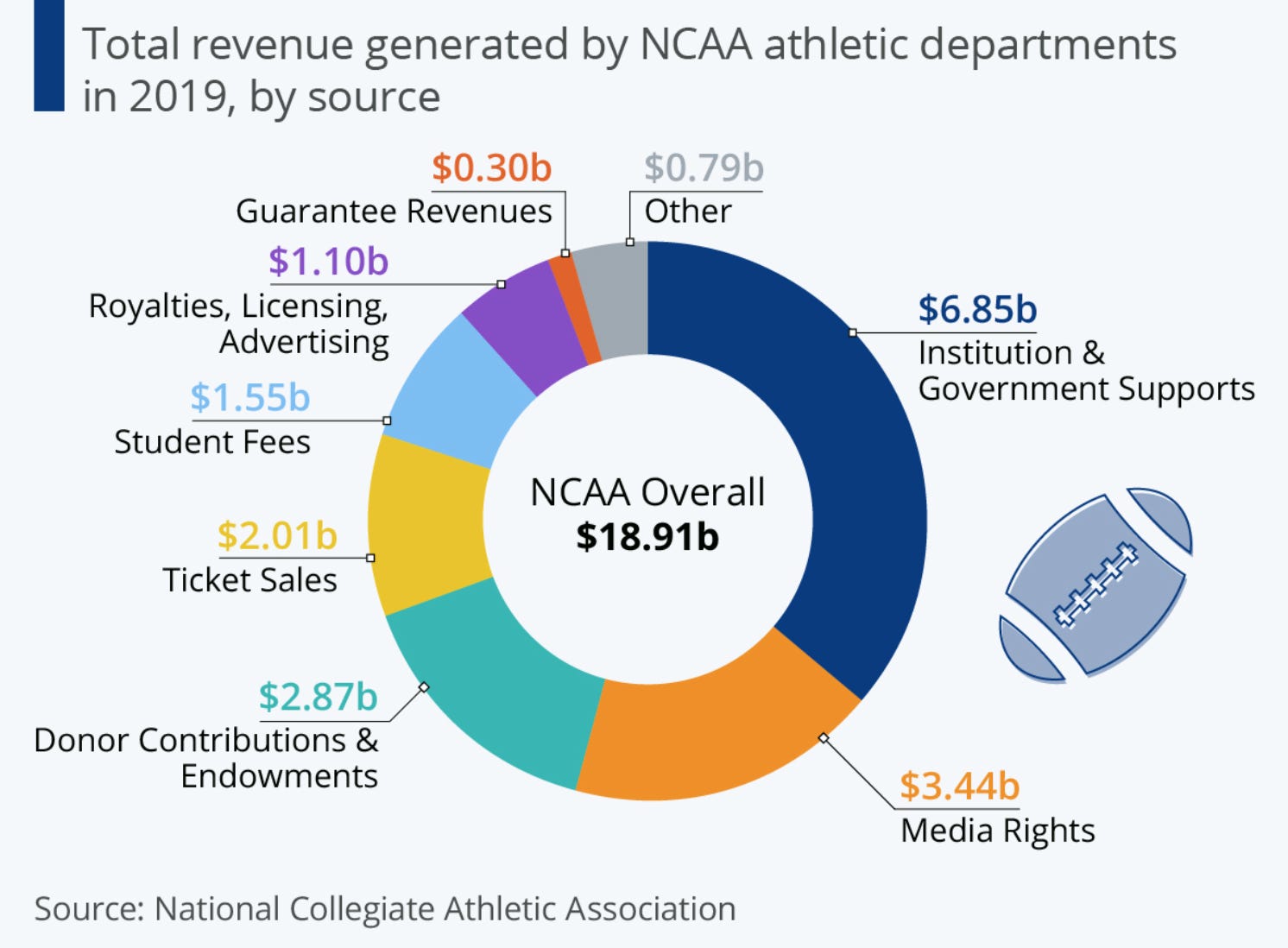
Private equity has finally found a clean entry point into college athletics, and it’s coming through Salt Lake City. The University of Utah is nearing a landmark deal with New York–based Otro Capital that would inject nine figures into the athletic department and create a new for-profit entity to run much of its business operations.
The move reflects mounting financial pressure across college sports as schools struggle to fund NIL obligations, facility upgrades, and a rapidly professionalizing ecosystem. Conferences and universities have explored private capital for years, but most efforts stalled under political and institutional resistance. If finalized, the deal won’t just change how one program is financed; it could redefine who ultimately owns the business of college athletics.
Holiday Season in Washington
Christmas party season is in full swing, and Imperium was well represented in Washington this week. Partner Josh Helton attended the White House Christmas reception as well as the Vice President’s holiday gathering at the Naval Observatory, closing out a busy stretch of year-end engagements.


Founders Going Unfiltered
“The world is a battle of ideas, and if you don’t participate, the environment moves around you.”
After years of brushing off X as a distraction, Qasar Younis — co-founder and CEO of Applied Intuition and a former partner at Y Combinator — says he’s changed his mind. As companies grow, he argues, founders inherit a responsibility that can’t be outsourced: speaking directly to customers, partners, critics, and the broader public without the buffer of institutional filters.
Younis sees this as a first-principles issue. If a founder keeps giving the same explanation privately — to customers, recruits, or journalists — then avoiding the public conversation is inefficient, not principled. In a world where ideas now move direct-to-consumer, staying silent means giving up control of the narrative. Whether on X or elsewhere, today’s public square rewards leaders who make their case plainly, and accept the risks of being heard without mediation.
Charlie Kirk’s Argument for the Sabbath
Charlie Kirk’s final book, completed just months before his death, isn’t a political manifesto so much as a personal intervention. Stop, In the Name of God makes a case for the Sabbath as an antidote for a country locked in permanent agitation. Kirk argues that constant productivity, outrage, and availability have hollowed out both faith and civic life.
In the months since his murder, the ideas behind the book have taken on a wider life through Erika Kirk, who has been engaging publicly on questions of loss, belief, and national fracture. That work will continue this Sunday, when she appears in a CBS News town hall moderated by Bari Weiss.
Legacy IP Meets Generative Video

Disney has struck a landmark deal with OpenAI that signals a decisive shift in how legacy media is approaching generative AI. The agreement makes Disney the first major content partner on Sora, OpenAI’s social video platform, pairing a $1 billion equity investment with tightly controlled licensing of more than 200 characters and props from Disney, Marvel, Pixar, and Star Wars.
Rather than treating AI platforms solely as adversaries, Disney is carving out a model that combines ownership stakes, direct oversight, and downstream distribution rights. Coming alongside an aggressive wave of copyright litigation against other AI firms, the OpenAI partnership draws a clear line — Disney is willing to collaborate, but only where compensation and brand protection are explicitly built into the system.
The Boom That Rewired Wall Street
The 1980s Wall Street boom is often cast as a neat morality tale, with the 1987 crash symbolizing the era. Judge Glock argues this view overlooks the wreckage of the 1970s: years of inflation, collapsing returns, and institutional dysfunction. The surge that began in 1982 grew from reforms and hard choices made earlier — anti-inflation policy, tax shifts, deregulation, and financial innovation — that reset how capital was priced and deployed.
That reset reshaped American capitalism. Takeovers and new financial tools pressured complacent conglomerates, steered assets to more efficient owners, and lifted valuations. Even the 1987 crash, long portrayed as the era’s reckoning, proved only a brief interruption before markets resumed their upward climb.
Other Reading
The Small Gods (Defense Analyses and Research Corporation)
Putting Clan Over Country Will Ruin America (The Free Press)
Auto Parts Company to Build $90.2 Million Plant in Clarksville, Bringing 928 Jobs (Clarksville Now)
Kiss to Receive Kennedy Center Honors in 2025 (Ultimate Classic Rock)
The Best Pictures in Sports in 2025 (The Athletic)
Breaking the Outer Space Treaty and Building a New Frontier (Pirate Wires)