Imperium is tracking seven stories this week, bookended by America's newly acknowledged weapons in space and the college football NIL arms race. Along the way: the new propaganda war, Tennessee's art of the deal, Sydney Sweeney breaks the internet (again), China's blueberry heist, and Meta's AI power broker. Here's what we're watching:
On Our Radar
American Weapons in Space
The United States officially has weapons in space. Air Force Secretary Troy Meink confirmed this week that the military has “on-orbit space control weapons” capable of defending American forces — the first time the government has publicly acknowledged putting weapons in orbit. Meink wouldn’t say what the systems can do, how many there are, or whether they have ever been tested. But he made one thing clear: the Pentagon intends to put a lot more of them up there.
Space has been militarized for decades, but the difference now is that Washington is saying so out loud. The U.S. military already depends on satellites for GPS, communications, surveillance, and missile tracking, while China and Russia have spent years developing ways to take those systems out in a conflict. If space is central to fighting a war on Earth, the Pentagon is going to want the ability to defend it.
The New Propaganda War
Foreign influence campaigns used to bring to mind images of spies and propaganda broadcasts; now they can look a lot like the rest of your social media feed. Governments have learned they can shape American opinion by funding creators or building fake online personas that make a message appear to come from ordinary people. The Justice Department has accused Russia of doing exactly that, while China-linked campaigns have tried to steer debates over U.S. technology policy and energy.
The impact is a much harder information environment to navigate, where genuine opinions and coordinated influence can look nearly identical online. Congress is considering new disclosure rules for foreign-backed influencers, but the broader challenge is here to stay. Countries have always tried to shape opinion abroad; social media just makes it easier than ever to reach people without revealing who’s footing the bill.
Tennessee’s Art of the Deal.
Tennessee has become one of the country’s best examples of how states can compete for investment by getting ready before companies come calling. That approach took shape through the Select Tennessee Certified Sites program, which prepared industrial sites ahead of time so companies could see that the land, utilities, and access were already in place. One of its earliest wins was the Clarksville site that landed Hankook Tire’s first U.S. factory and an initial $800 million investment. Both Imperium founders were senior members of the Tennessee Department of Economic and Community Development under then-Commissioner Bill Hagerty during that period, when the state was building the economic-development playbook that continues to pay dividends today.
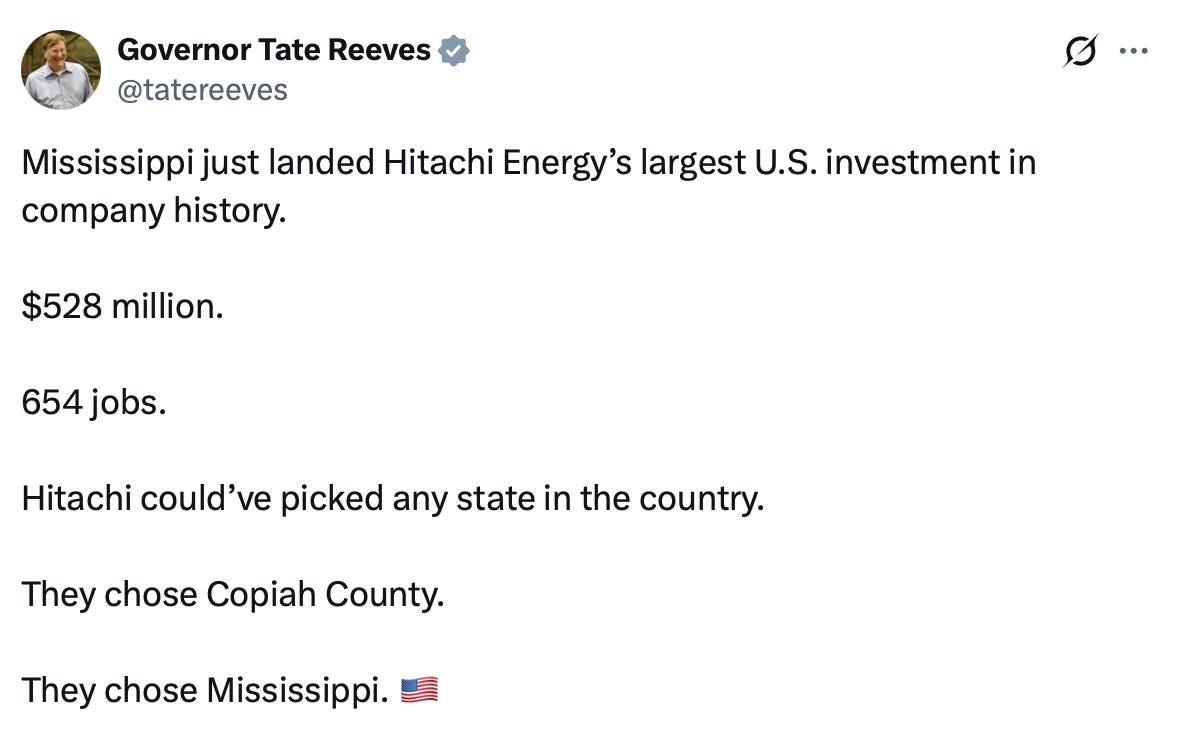
Other Southern states are getting good at a similar game. Mississippi just landed Hitachi Energy’s largest U.S. investment to date: a $528 million project expected to create more than 650 jobs in Copiah County. Companies looking to build in America have plenty of states competing for their investment — more and more, the winners are those that have already laid the groundwork to execute when the call comes.
Sydney Sweeney Breaks the Internet, Again
Sydney Sweeney has managed to break the internet again, this time by stripping down for sports-betting platform Novig. The spot uses strategically placed sports equipment and one of the oldest advertising formulas around: sex sells. Several prominent female athletes and advocates have attacked the campaign for objectifying women and undermining decades of progress in women’s sports.
But the ad was never trying to say anything about women’s athletics. It was selling gambling, and Sweeney was the hook. The backlash instead exposes a familiar hypocrisy on the left: the same people who claim to advocate for women’s right to make their own choices suddenly have plenty to say about Sweeney making hers. She appeared in a provocative ad aimed at sports bettors. Turning that into a referendum on the progress of women’s sports attempts to shame the freedom of choice that seems to be selectively championed.
China’s Blueberry Heist
Driscoll’s went to China 15 years ago hoping to get more than a billion people hooked on blueberries. It worked — maybe too well. The California company brought premium varieties and modern growing techniques to Yunnan, only to watch Chinese competitors pile in. Some of them copied Driscoll’s methods, while Chinese courts found growers illegally propagating protected varieties. Production exploded, China passed the U.S. as the world’s largest blueberry producer, and prices crashed.
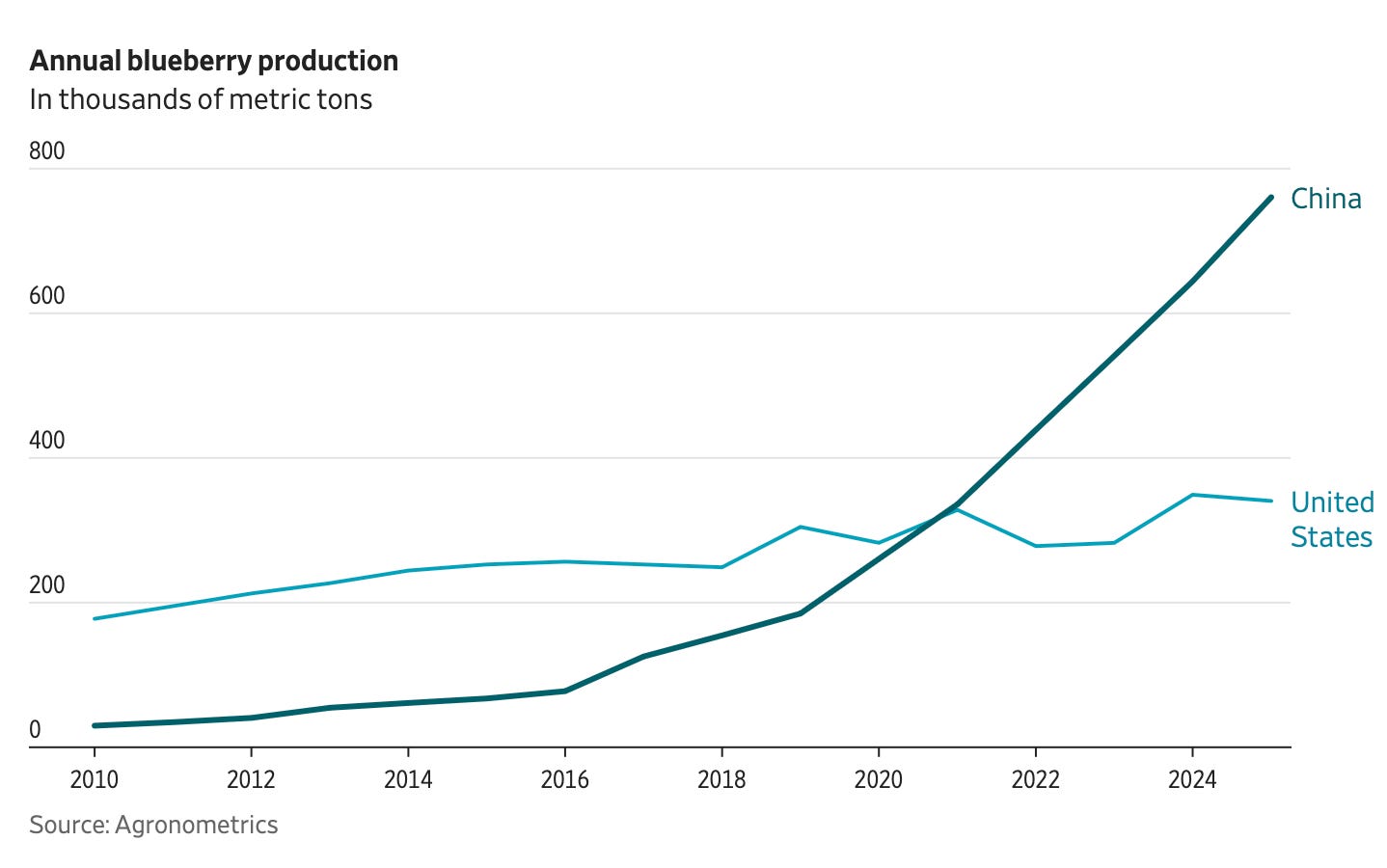
It’s a familiar story for Western companies doing business in China: bring in valuable technology or intellectual property, help build a market, and eventually face a massive domestic industry that learned (or stole) from you. Driscoll’s is fighting back in court and plans to stay. But its experience offers a pretty simple lesson: cracking the Chinese market is one thing; keeping an advantage once you’re there is another.
Meta’s AI Power Broker
Mark Zuckerberg wants to spend more than $600 billion building Meta’s AI future. Dina Powell McCormick has the job of helping make that possible. The former Goldman Sachs executive and Trump administration official joined Meta’s board last year before Zuckerberg pulled her inside the company to co-lead Meta Compute. Nine months later, she’s become one of his closest advisers, using decades of relationships on Wall Street and in Washington to strike infrastructure deals and handle the problems Zuckerberg would rather not spend his time solving.
Her job is getting harder as Meta’s data-center buildout runs into resistance and faces questions about who pays for all the power and infrastructure AI requires. Meta has responded with workforce programs and a $1 billion community fund, while Powell McCormick works the relationships needed to keep projects moving. Building better AI may be an engineering problem, but building the infrastructure requires someone who knows how the physical world works.
The College Football Arms Race
College football has finally put some real numbers on the NIL race, and they’re enormous. The Athletic’s estimates put Ohio State’s 2026 roster at $49 million to $54 million, with Oregon and Texas in the same neighborhood. At the other end, Boston College is working with roughly $8 million to $13 million. The schools most likely to make the playoff are, unsurprisingly, generally the schools spending the most to acquire and keep talent.
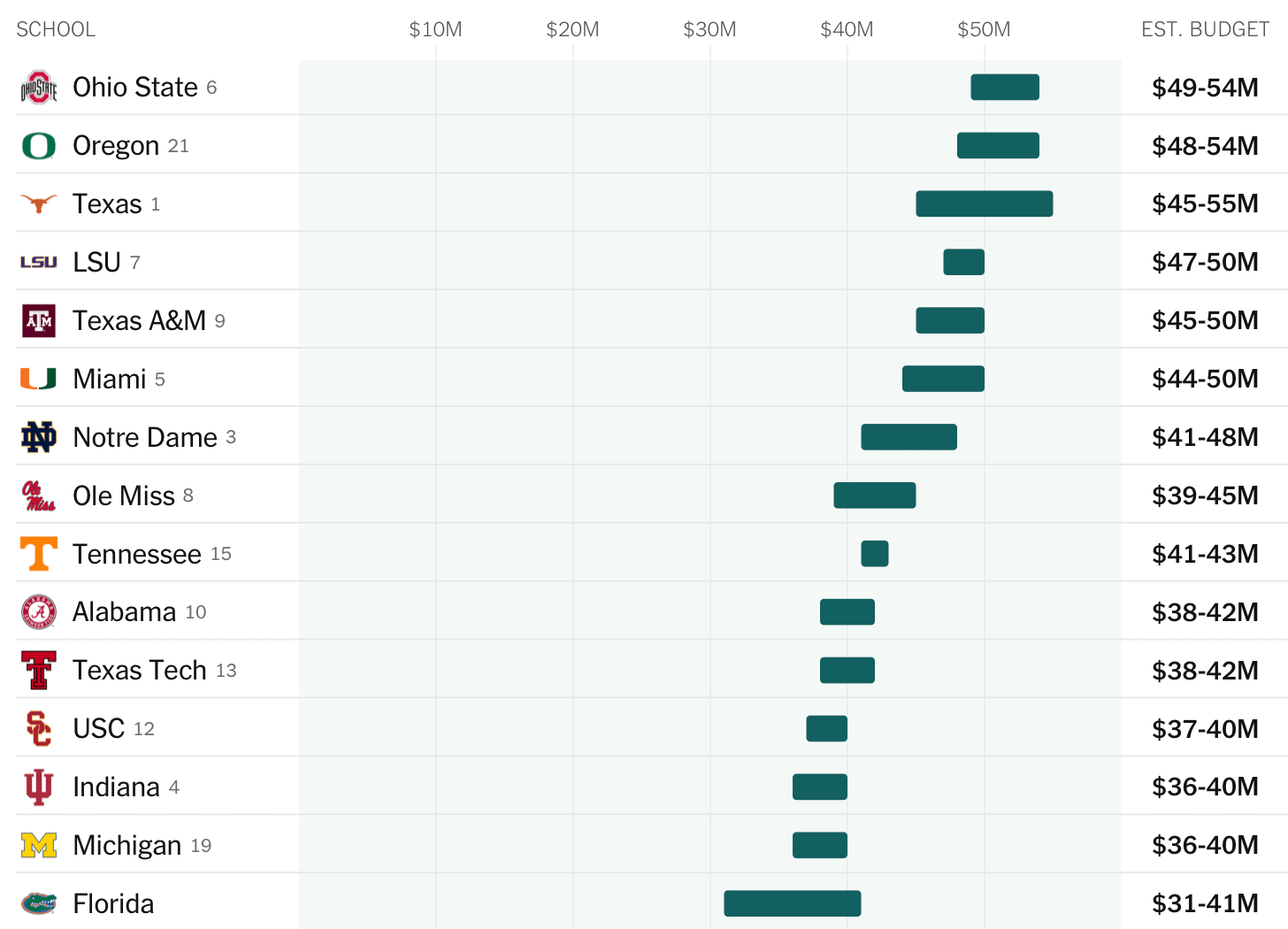
Congress is trying to bring some order to the market. The proposed “Protect College Sports Act” would pair the existing revenue-sharing cap with a new retention fund that lets schools spend up to $22.5 million more to keep current athletes, with room for a higher limit if they invest in women’s and Olympic sports. But the top programs are already approaching or exceeding what that system would allow, which tells you how difficult it will be to put the spending genie back in the bottle.
Other Reading
Tech Billionaire Peter Thiel Bringing Antichrist Lectures to Nashville (The Tennessean)
How America Learned to Love Nuclear Again (Pirate Wires)
Your Car is Selling Your Data (The Verge)
2 Nashville Restaurants Land on New York Times’ 50 Best in America (The Tennessean)
Chris Wright on Energy Abundance (The Free Press)